
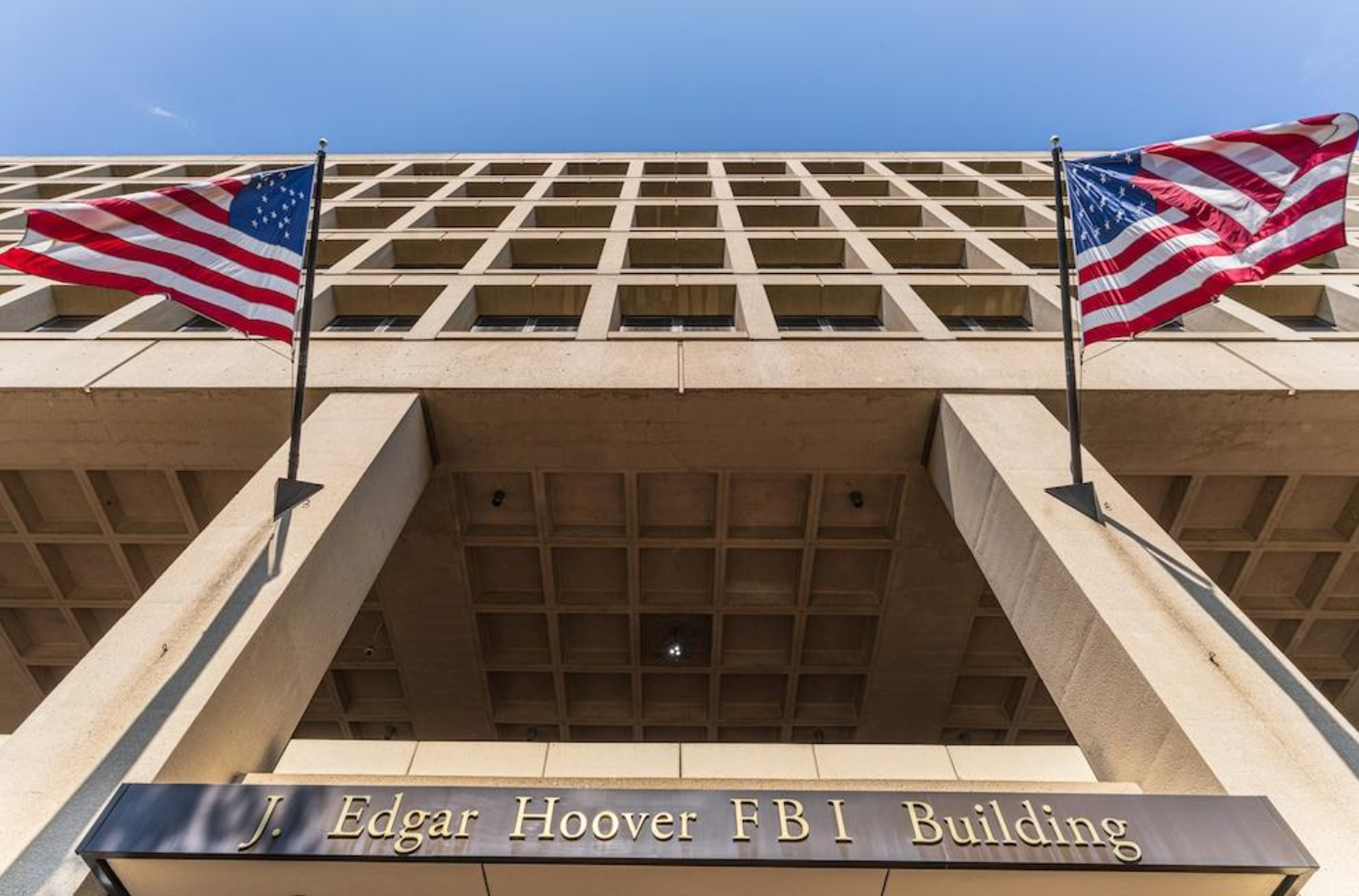
The FBI is investigating a possible breach of a national law enforcement database. And the timing couldn't be more uncomfortable for Washington.
Imagine calling the police because someone stole your identity, only to discover that the very system designed to protect you might have security problems of its own.
Welcome to America's latest cybersecurity headache.
The FBI is investigating an apparent breach of its National Crime Information Center (NCIC), a massive database used by law enforcement agencies across the country.
According to CNN, NBC News and the Associated Press, investigators are examining a possible intrusion into a system containing information about wanted criminals, missing persons, stolen property and criminal records.
And that's not the only problem.
The Department of Agriculture has also been hit by a separate cyberattack targeting a system used to make payments to American farmers.
Two federal agencies. Two security incidents. One very uncomfortable question.
Who is protecting the systems that are supposed to protect us?
What Could Hackers Have Accessed?
The NCIC is not an ordinary government database. Police officers depend on it to check warrants, identify fugitives and obtain information that can affect life-or-death decisions.
But here's an important distinction: investigators have not publicly established what information, if any, was stolen or altered.
The identities of those responsible also remain unknown.
Meanwhile, the Agriculture Department breach has raised concerns that attackers might attempt to reach other sensitive systems. There is no confirmation that they succeeded.
And Washington Says Relax?
President Donald Trump acknowledged the FBI incident Saturday, describing the news as troubling.
His administration has separately urged Americans not to panic over recent technology outages, which officials say were not necessarily caused by hackers.
The incidents have not been shown to be connected.
Still, the optics are hardly reassuring.
Americans are constantly reminded to protect their passwords, freeze their credit and watch for suspicious emails.
Perhaps it's time to ask whether Washington is following its own advice.
If federal agencies cannot guarantee the security of their most sensitive systems, how much confidence should ordinary Americans have in the safety of their personal information?
NEWSruDaily — Independent News Without Borders