
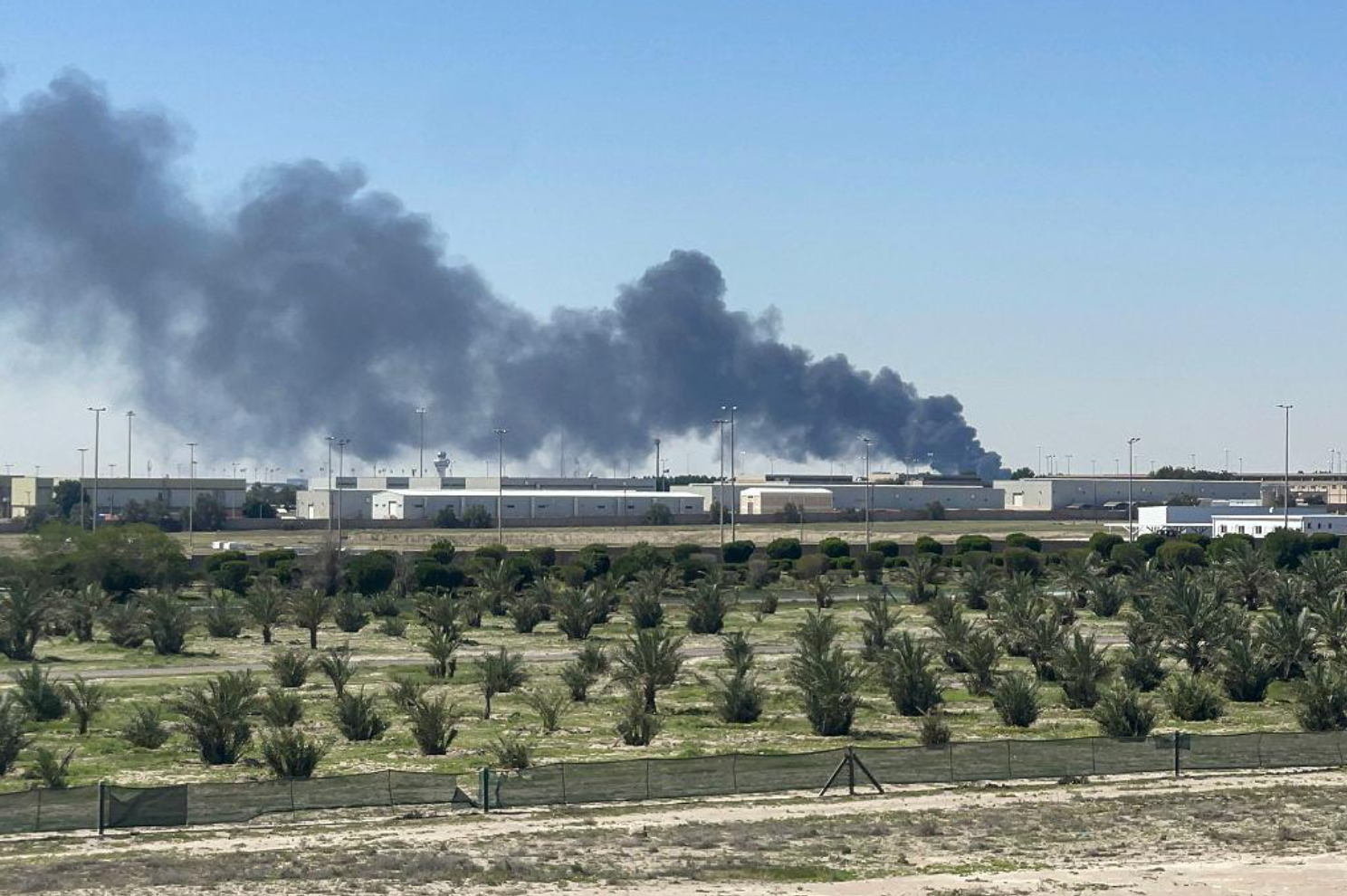
CAIRO — The confrontation between Iran and the United States has entered another dangerous phase, with Iranian attacks targeting a U.S. military base in Kuwait and sites in Bahrain, raising fears that the conflict could spread further across the Persian Gulf.
The attacks Wednesday followed an American airstrike on an Iranian missile facility on Qeshm Island, near the strategically important Strait of Hormuz.
What began as a series of military exchanges is increasingly threatening the security of neighboring countries and one of the world's most important energy corridors.
What Happened?
Iranian forces targeted Ali Al Salem Air Base in Kuwait, which hosts American military personnel and operations.
Kuwait's military reported intercepting incoming drones, while its government condemned the attacks as a threat to national security.
Bahrain also reported Iranian aerial attacks. Authorities issued emergency alerts instructing residents to seek shelter before announcing that the immediate danger had passed.
Neither country initially reported casualties or significant damage from Wednesday's attacks.
Bahrain hosts the U.S. Navy's Fifth Fleet, making it particularly important to American military operations in the region.
Why Is Iran Attacking?
The latest escalation followed a U.S. strike on an Iranian missile launch site on Qeshm Island on Tuesday.
Washington's attack came after an Iranian strike on an American radar installation in Bahrain.
Iran has described its recent military actions as responses to American operations, including surveillance activities and attacks on Iranian infrastructure.
The confrontation is unfolding amid a U.S. naval blockade that has placed considerable pressure on Iran's economy.
Oil Tankers Are Already Paying the Price
The Strait of Hormuz, separating Iran from the Arabian Peninsula, is a critical passage for international oil shipments.
Commercial vessels have faced continuing threats despite American efforts to restore tanker traffic.
The United Arab Emirates' state-owned energy company ADNOC reported that one crew member was missing and 11 others injured following an attack on a tanker in the strait.
The dangers extend beyond shipping. Continued instability could increase insurance costs, disrupt energy deliveries and create additional pressure on international markets.
Could This Become a Wider War?
President Trump has suggested that further American strikes are unlikely, even as Washington has increased its military presence in the region.
Analysts warn that repeated limited attacks can become difficult to control.
Neither side may want a full-scale confrontation. But every new exchange increases the possibility that a miscalculation could produce one.
The immediate question is whether Washington and Tehran can find a diplomatic exit before another attack forces a more serious military response.