
November 27, 2026 | NEWSruDaily
The balance of power in the Middle East is shifting.
Pakistan and Turkey pledged their support for Saudi Arabia on Friday during defense talks in Islamabad, as Houthi attacks continue to threaten the kingdom's security.
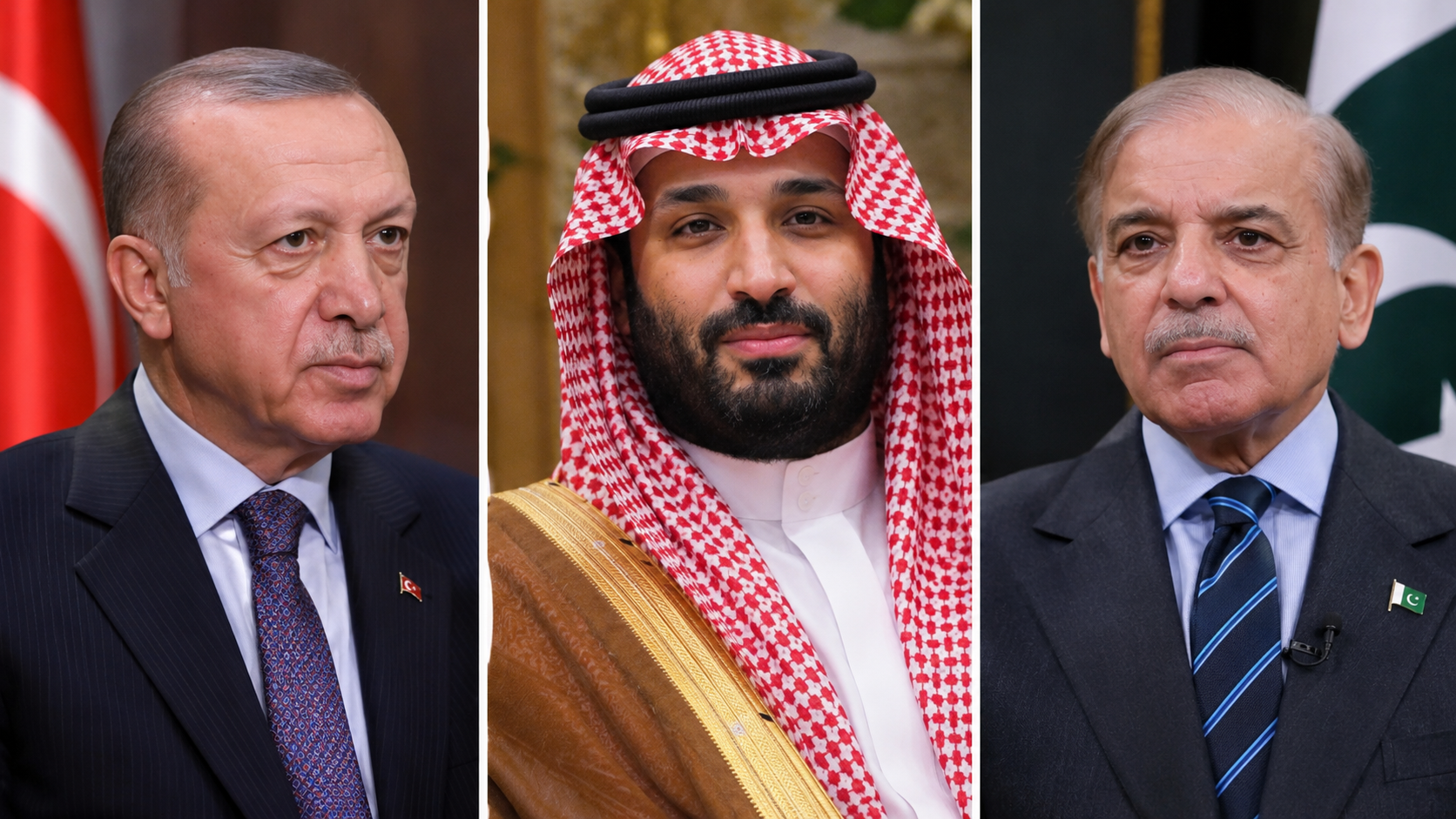
Turkish President Recep Tayyip Erdogan has formally completed the ratification of a defense agreement signed by the three countries in August. Under its terms, an attack against one member is considered an attack against all three.
And this is no ordinary alliance.
Turkey possesses one of NATO's largest militaries. Pakistan is the only nuclear-armed Muslim nation. Saudi Arabia remains one of the world's most influential oil producers.
Together, they represent a significant military, political and economic force.
Could the conflict spread?
Officials insist that the agreement is defensive and is not directed against Iran. Turkey has also said it does not intend to send troops to fight in Yemen.
Nevertheless, the alliance introduces another layer of complexity into an already volatile regional conflict.
The consequences could extend well beyond the Middle East. Commercial shipping routes, international energy supplies and global financial markets remain vulnerable to further escalation.
For Washington, the agreement also presents an interesting diplomatic development. Three countries with established relationships with the United States are strengthening their own collective security arrangements.
Whether this new alliance will discourage further attacks or draw more countries into the conflict remains an open question.
The Middle East may be witnessing not just another military crisis, but the emergence of a new regional power structure.