
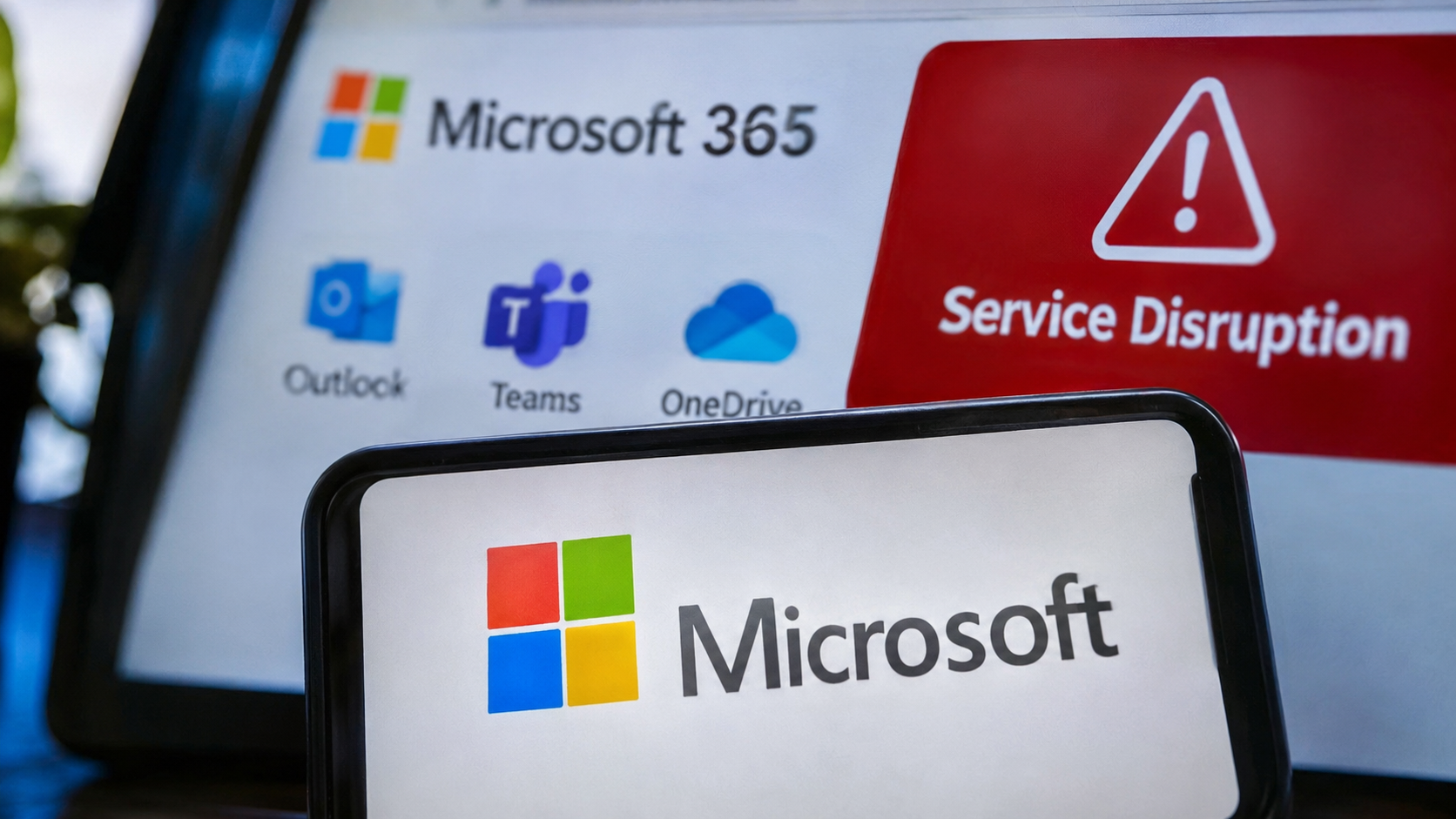
Microsoft Down Yesterday: What Happened When Outlook, Teams and Microsoft 365 Went Offline Worldwide?
November 13, 2026 | NEWSruDaily — Technology
Imagine showing up for work and discovering your email doesn't work, your Teams meetings won't connect, and your company's digital tools are suddenly unavailable. On Thursday, November 12, that nightmare became reality for users around the world.
A massive Microsoft outage disrupted Outlook, Teams, Copilot and other Microsoft 365 services, triggering a wave of complaints across social media and leaving businesses struggling to communicate.
And the disruption didn't end when the American workday was over.
Nearly 140,000 Outlook Outage Reports at the Peak
According to Reuters, Downdetector recorded a peak of 138,058 Outlook problem reports around 1 p.m. Eastern Time on Thursday.
Users reported being unable to open their inboxes, send emails or access essential Microsoft services.
The problems quickly spread beyond the United States. Downdetector identified disruptions across 74 countries and territories, turning what initially appeared to be a regional technical problem into an international incident.
The figures represent user-submitted outage reports, not the total number of people affected.
What Actually Caused Microsoft to Go Down?
Microsoft's investigation revealed that a large number of servers had unexpectedly become unavailable, forcing remaining infrastructure to handle excessive demand.
The resulting imbalance caused widespread connectivity failures.
Engineers attempted to restore service by redistributing network traffic, restarting affected servers and applying targeted technical changes.
But the recovery proved more complicated than expected.
Some initial fixes failed to deliver the anticipated improvements, forcing Microsoft to pursue alternative solutions.
The company has not yet publicly established a definitive root cause for the entire incident.
There has been no confirmed evidence that the disruption was caused by a cyberattack.
Microsoft Apologizes as Customers Demand Answers
In a public statement on X, Microsoft apologized for the disruption and acknowledged the responsibility that comes with operating technology used by businesses and individuals worldwide.
The company said it was observing broad recovery and improving stability.
However, the incident continued into Friday, November 13, with some customers still experiencing intermittent access problems and delayed email delivery.
The Outage Didn't Stop at Microsoft
The disruption also affected technology beyond Microsoft's own applications.
Reuters reported that Microsoft-related connectors used by OpenAI and Anthropic experienced problems, illustrating how failures in one company's infrastructure can affect services provided by other technology businesses.
Government agencies and organizations in several countries also reported disruptions.
The outage demonstrated something increasingly difficult to ignore: modern digital services are deeply interconnected.
When one major provider experiences a failure, the effects can spread far beyond its own customers.
The Bigger Question: Has the World Become Too Dependent on Microsoft?
Microsoft 365 has more than 450 million paid commercial subscriptions.
For businesses that rely on Outlook for communication, Teams for meetings and Microsoft's cloud infrastructure for daily operations, an extended outage can create serious operational challenges.
A company may have reliable employees, strong cybersecurity and expensive software subscriptions — yet still be unable to access essential tools when its technology provider experiences a major failure.
That raises an uncomfortable question for business leaders:
If your entire company depends on one technology provider, do you really have control over your business?
Technology experts have long emphasized the importance of backup communication systems, independent recovery procedures and business continuity planning.
Thursday's outage provided a powerful reminder of why those precautions matter.
Is Microsoft Still Down Today?
As of Friday, November 13, Microsoft reported improving service stability and continued recovery across affected regions.
However, the company had not confirmed that every service was fully restored for every customer.
Users experiencing ongoing problems should check Microsoft's official service health dashboard for updates.
A Warning for the Digital Economy
The Microsoft outage will eventually be resolved. Emails will arrive, meetings will resume, and businesses will return to normal operations.
But the larger issue remains.
The world's economy increasingly runs on infrastructure controlled by a relatively small number of technology companies.
And when one of those systems fails, the consequences can be felt across industries, borders and time zones.
Microsoft went down yesterday. The real question is: What happens when the next technology giant goes offline — and is your business ready?
NEWSruDaily | Independent News Without Borders