
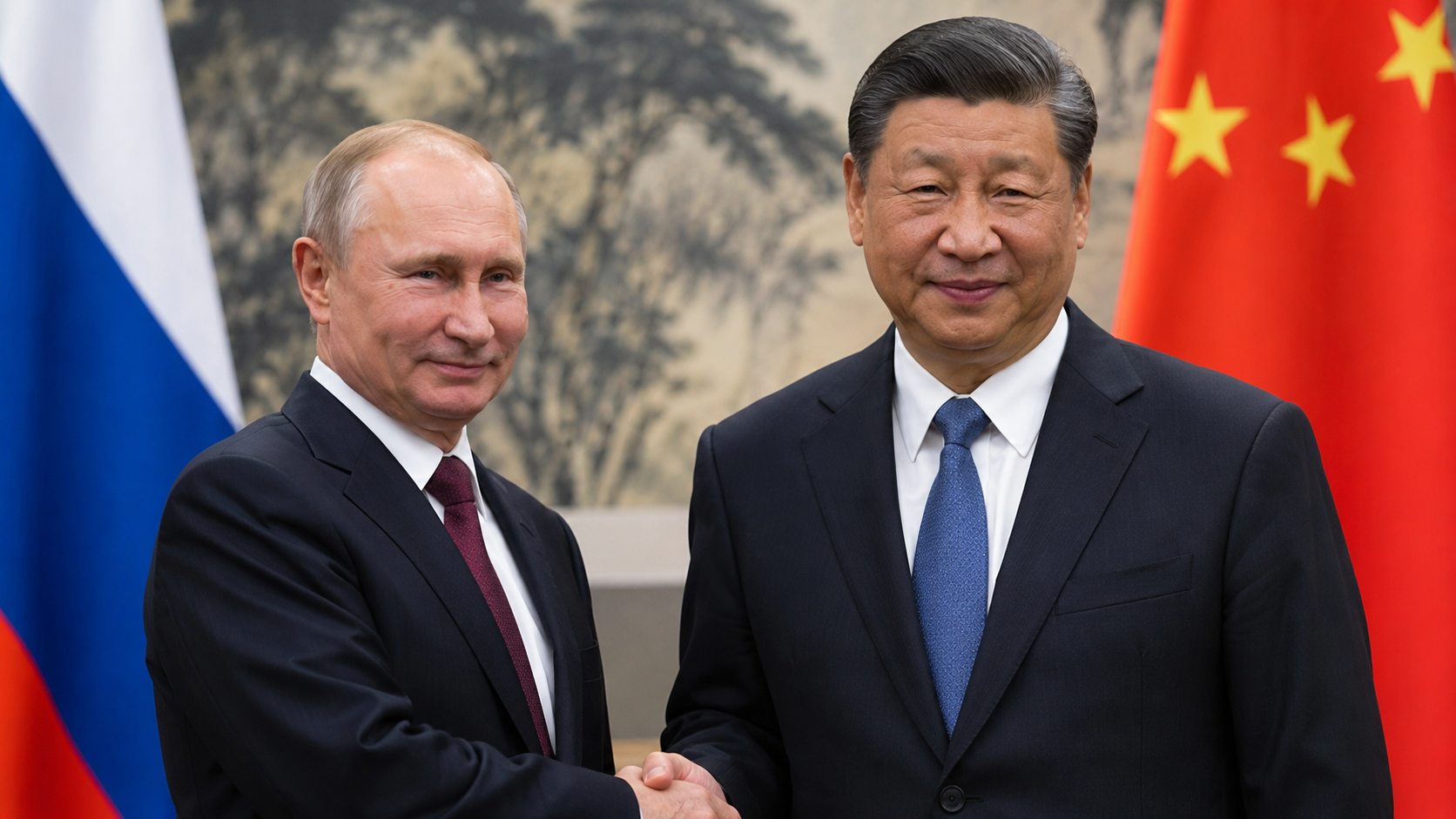
Russia and China are no longer hiding their ambitions. Both want a world where the United States has less influence, and both believe their partnership can help make that happen.
Vladimir Putin and Xi Jinping are preparing for high-level talks in Shenzhen, China, as Beijing hosts the APEC summit on November 18–19.
The two leaders have repeatedly called for a more balanced, multipolar world order. Moscow and Beijing describe their cooperation as a source of stability. Washington sees a more complicated picture.
Why Russia Needs China — and China Needs Russia
For Putin, China has become an essential economic partner as Western sanctions continue to isolate Russia.
Beijing buys Russian energy, supplies manufactured goods, and provides Moscow with an important diplomatic relationship at a time when many Western governments have distanced themselves.
China benefits, too.
Russia offers access to energy, natural resources, and a powerful partner that shares Beijing's frustration with American dominance.
But this is not a friendship without limits. China has far more to lose from a major confrontation with Western economies, and Beijing is careful to protect its own interests.
What Does This Mean for America?
The growing relationship creates a difficult challenge for Washington.
Russia remains a major nuclear power. China is America's principal long-term strategic competitor, with enormous manufacturing capacity and expanding technological and military capabilities.
Closer coordination between them could make American foreign policy more complicated, particularly over Ukraine, Taiwan, trade, and international sanctions.
Yet the two countries are not interchangeable allies. Their economic priorities differ, and China has little reason to let Moscow dictate its foreign policy.
Trump Is Entering the Picture
The timing is particularly significant.
President Donald Trump is expected to meet Putin and Xi in Shenzhen on November 19, bringing the leaders of three nuclear powers together for an unusual diplomatic encounter.
The proposed discussions include nuclear arms control and other international security issues.
For Putin, appearing alongside the American and Chinese presidents would also carry considerable symbolic value.
For Trump, the challenge is different: negotiating with two powerful rivals whose interests sometimes overlap but rarely align completely.
A New World Order — or Political Theater?
Putin and Xi want greater influence over international affairs. That much is clear.
What remains uncertain is whether their partnership can fundamentally change the global balance of power.
China still needs Western markets. Russia remains heavily affected by its war in Ukraine. And neither country can simply replace America's economic, military, and diplomatic reach.
The upcoming meetings may produce important agreements — or little more than carefully staged photographs.
But one question deserves attention: If Russia and China continue moving closer together, will the United States find a way to manage both relationships without pushing them into an even stronger partnership?
That may prove more important than anything said in front of the cameras.