
SHENZHEN, China, November 19, 2026 | NEWSruDaily
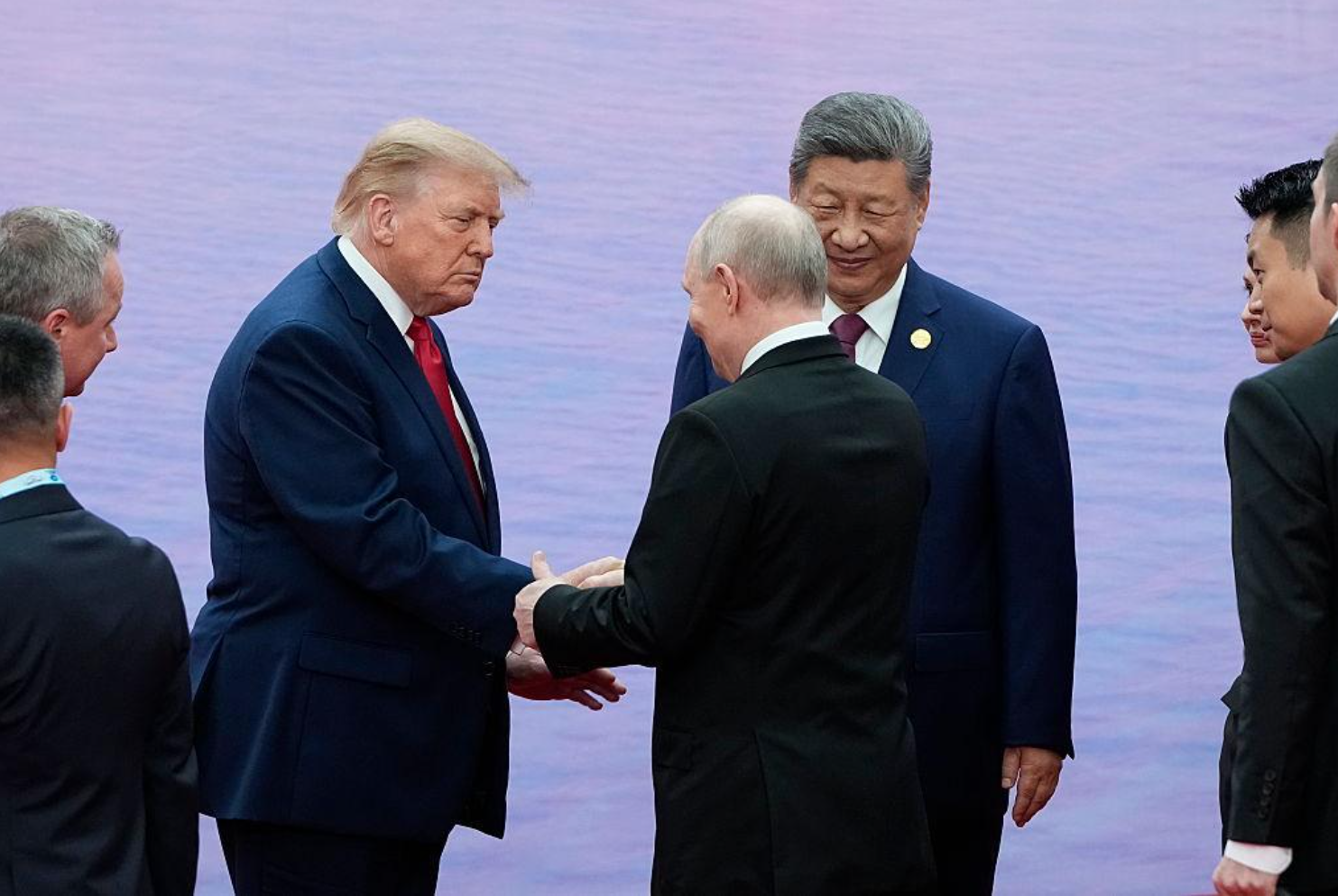
Three presidents. Three nuclear powers. One historic meeting. Donald Trump, Vladimir Putin and Xi Jinping gathered in China on Thursday to discuss some of the world's most dangerous conflicts. They left with a declaration on peace — but no peace agreements.
The unprecedented trilateral summit took place in Shenzhen, where the leaders of the United States, Russia and China met for approximately 70 minutes.
Their joint declaration addressed nuclear security, energy supplies, United Nations reform and international law.
Notably absent were two issues dominating international headlines: the wars involving Ukraine and Iran.
Iran: Trump Wants Cooperation, but Gets No Deal
During his meeting with Xi, Trump emphasized that Washington and Beijing share an interest in keeping oil flowing through the Strait of Hormuz, one of the world's most important energy routes.
He also reiterated that Iran must not obtain nuclear weapons.
China has strong economic interests in maintaining access to Iranian oil, while Russia has developed close political and military ties with Tehran.
Yet neither Xi nor Putin announced specific commitments to help Washington resolve the confrontation.
The final declaration contained no reference to Iran, its nuclear program or a diplomatic settlement.
For Trump, securing Chinese cooperation on energy security would be significant. For Beijing, however, maintaining relations with both Washington and Tehran offers greater flexibility than taking sides.
Ukraine: Peace Talks Without Ukraine
Trump also expressed hope that the United States and China could help end Russia's war against Ukraine.
Putin discussed the conflict during his separate meeting with Trump, according to the Kremlin.
But Ukraine was not represented at the trilateral summit, and the final declaration made no mention of the war or Ukraine's territorial sovereignty.
That omission is politically significant.
Kyiv has repeatedly insisted that no settlement concerning its future should be negotiated without Ukrainian participation.
For Putin, the meeting offered something valuable even without a peace agreement: an opportunity to appear alongside the American and Chinese presidents despite Russia's continued invasion of Ukraine.
Nuclear Weapons: Agreement in Principle, Not in Practice
The leaders reaffirmed their opposition to nuclear war and pledged to continue discussions on reducing nuclear risks.
But they announced no limits on nuclear arsenals, no verification mechanism and no timetable for a future treaty.
The absence of concrete commitments matters following the expiration of New START, the last major nuclear arms-control agreement between Washington and Moscow.
China has resisted joining formal negotiations, arguing that its nuclear arsenal remains considerably smaller than those of Russia and the United States.
Why China May Be the Biggest Diplomatic Winner
Xi hosted two geopolitical rivals on Chinese territory, positioning Beijing as a central player in international diplomacy.
The summit allowed China to demonstrate its influence without committing to a settlement in Ukraine or Iran.
Beijing also avoided making major concessions on nuclear weapons while maintaining its relationships with Moscow and Washington.
For Xi, that combination offered considerable diplomatic value.
A Declaration, but Few Answers
The three leaders agreed to pursue UN reform, maintain stable energy supplies and continue dialogue on nuclear security.
Their declaration also emphasized protections for state officials against what they described as abuses of international judicial jurisdiction — language particularly relevant to Putin, who faces an International Criminal Court arrest warrant.
But the summit produced no binding nuclear agreement, no Ukraine peace plan and no breakthrough on Iran.
The meeting was historic in its format. Whether it becomes historic in its consequences remains uncertain.
Three leaders who collectively hold enormous global power sat at the same table. The photographs will make history books. Whether their decisions will change history is another question entirely.