
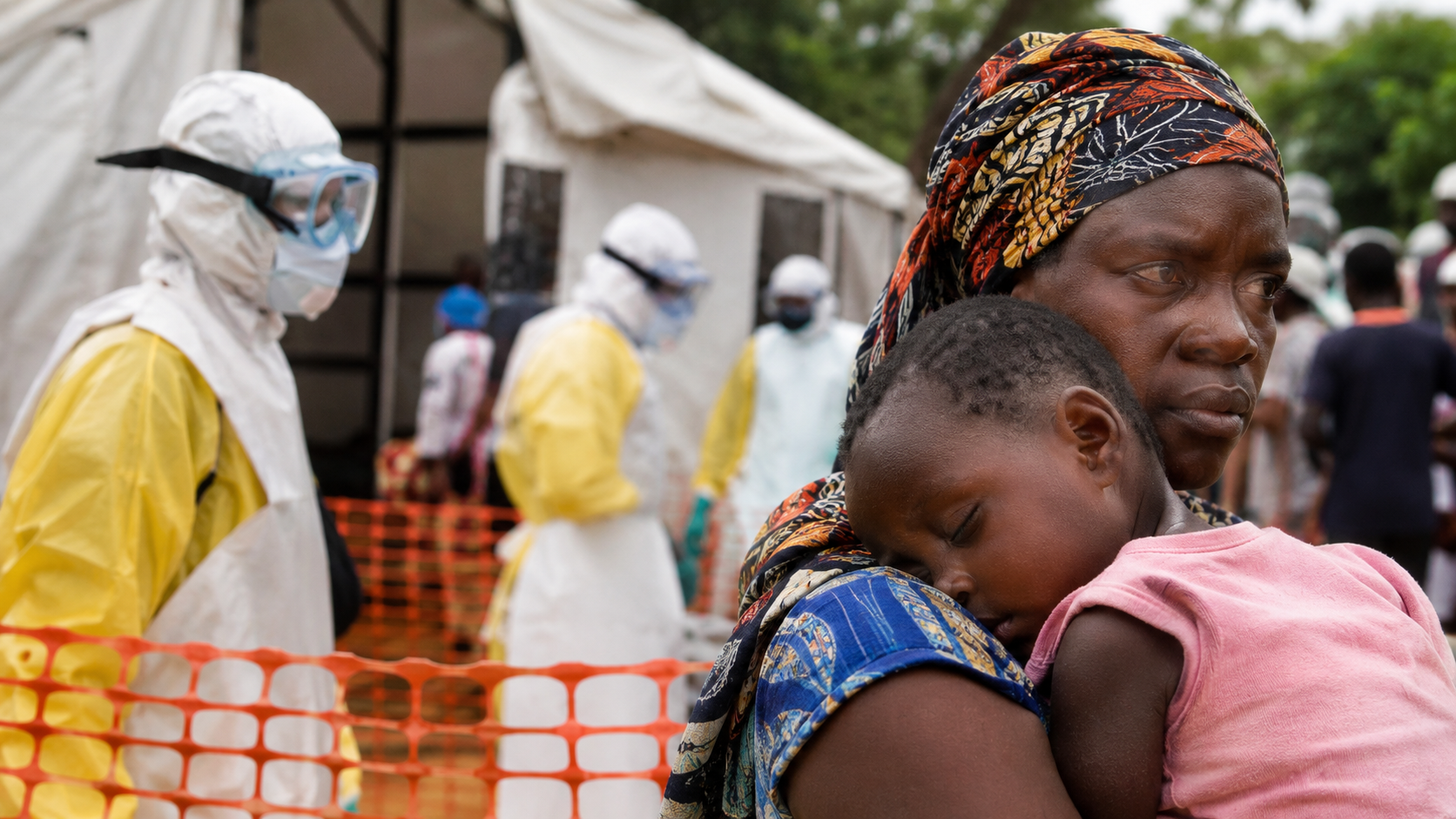
More than 80% of new infections are being discovered outside known contact lists. Healthcare workers are going unpaid, ambulances reportedly lack fuel, and billions in promised aid have yet to reach the front lines. Six months into the outbreak, Africa's top public-health agency warns that Ebola remains out of control.
By NEWSruDaily | November 15, 2026
More than 5,500 people are dead. Over 11,200 have been infected. And approximately $2.9 billion has been pledged to fight the outbreak.
Yet ambulances reportedly lack fuel, some healthcare workers haven't been paid for months, and new Ebola infections continue to escape surveillance.
Six months after the Democratic Republic of the Congo declared an Ebola outbreak on May 15, Africa's leading public-health agency says the epidemic remains out of control.
The question is no longer simply why Ebola is spreading. It's why the international response is struggling to stop it.
80% of New Cases Are Escaping Contact Tracing
One of the most alarming findings comes from the Africa Centres for Disease Control and Prevention.
According to its director-general, Jean Kaseya, more than 80% of new Ebola cases are being detected among people who were not previously identified as contacts of infected patients.
That means health authorities are frequently discovering infections only after the virus has already moved beyond known transmission chains.
More than 65% of deaths are occurring in communities rather than medical facilities, according to Kaseya.
This creates an especially dangerous situation. Patients may not receive timely treatment, while relatives and caregivers face greater risks of exposure.
The outbreak, caused by the Bundibugyo virus, has already become the second-largest Ebola epidemic on record.
And officials warn it could become even worse.
Billions Promised. Ambulances Without Fuel.
Perhaps the most troubling part of the crisis is the gap between international financial commitments and conditions on the ground.
Approximately $2.9 billion has been pledged to support the response.
Yet the medical humanitarian organization Médecins Sans Frontières has reported serious shortages in affected areas, including ambulances without fuel, insufficient surveillance teams and inadequately trained personnel.
Africa CDC says roughly $1.6 billion in pledged assistance still needs to be released.
Meanwhile, some frontline healthcare workers have gone months without receiving their salaries.
The Congolese government is working to improve payment systems, including digitizing payrolls.
But the larger question remains:
How can an international emergency response receive billions in commitments while essential services struggle to operate?
The available reporting does not establish that the money has been stolen or deliberately diverted. It does, however, raise serious questions about delayed disbursements, coordination and whether available resources are reaching the communities that need them most.
Children Are Among the Most Vulnerable
The human cost is especially devastating for children.
According to the World Health Organization, children account for approximately one-third of deaths in the outbreak.
Among infected children younger than five, roughly seven in ten have died.
These figures highlight the consequences of delayed diagnosis, limited access to medical care and the extraordinary challenges facing families in affected communities.
Although thousands of patients have recovered, the outbreak continues to expand into new areas.
WHO reports that approximately 400 to 500 new cases are still being recorded each week.
Why Can't Health Workers Stop the Virus?
The crisis is not simply a shortage of medical supplies.
Eastern Congo has experienced years of armed conflict, displacement and insecurity.
Health workers face attacks, dangerous travel conditions and disruptions that make contact tracing and treatment extremely difficult.
When medical teams cannot safely reach affected villages, infected patients may remain unidentified.
When hospitals are attacked, essential services can stop.
And when communities lose trust in authorities, efforts to isolate patients and monitor possible exposures become even harder.
The result is a dangerous cycle: insecurity disrupts healthcare, delayed detection allows further transmission, and the expanding outbreak places even greater pressure on an already fragile system.
Could Ebola Spread Beyond Africa?
The outbreak has already crossed international borders.
Confirmed cases have been reported in Uganda, Kenya and Nigeria, alongside an imported case reported in Europe.
However, this does not mean Ebola is spreading uncontrollably around the world.
Unlike respiratory infections such as COVID-19, Ebola generally spreads through direct contact with infected bodily fluids or contaminated materials.
People are not considered infectious before symptoms develop.
European health authorities currently assess the risk to the general population in Europe as very low, while the CDC continues to monitor the outbreak and international travel-related risks.
The immediate danger remains greatest in affected communities and among people with direct exposure to infected patients.
A Crisis of Accountability
Six months into the emergency, the outbreak has exposed problems that extend beyond medicine.
International funding has been promised, but essential resources are still missing.
Health workers are risking their lives, yet some remain unpaid.
Surveillance systems are failing to identify many new infections before further transmission occurs.
And families continue to lose loved ones to a disease that requires rapid detection, isolation and coordinated medical care.
Africa CDC has called for faster funding, stronger cooperation and more effective use of available resources.
The World Health Organization reports progress in slowing transmission in some early outbreak centers, but warns that new hotspots continue to emerge.
The world has pledged billions to fight Ebola. The urgent question is whether that support can reach the people who need it before more lives are lost.
NEWSruDaily — Independent News Without Borders.
Editor's note: Figures reflect Congolese government data reported by Reuters on November 15, 2026. Earlier WHO and CDC updates report slightly lower totals because of reporting dates. Funding pledges should not be confused with money already disbursed or spent.