
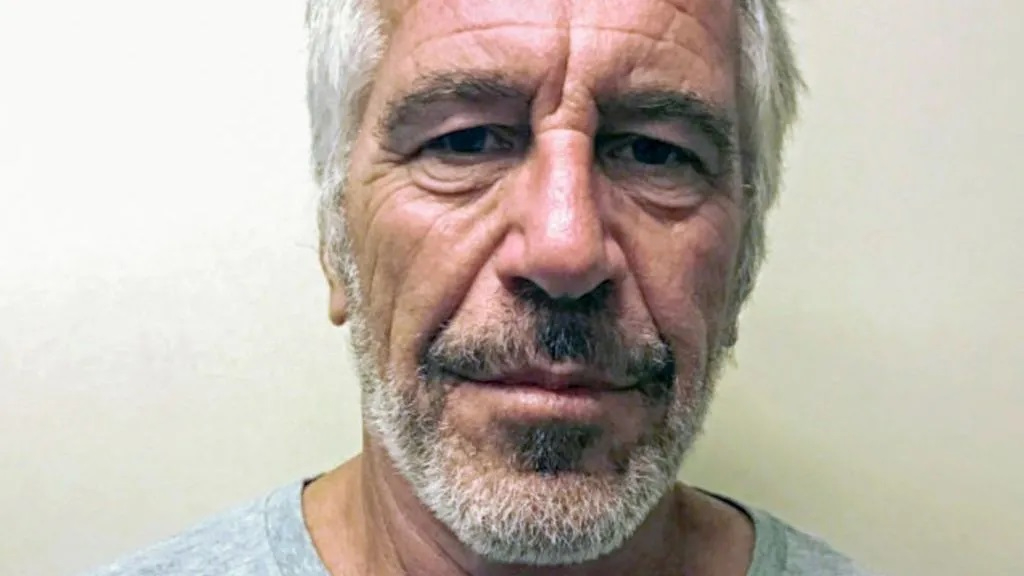
A forensic expert has said he believes convicted sex offender Jeffrey Epstein's death in jail was a homicide rather than a suicide, the BBC reports.
Source: BBC, citing Professor Michael Freeman
Details: Speaking on BBC Newsnight, Freeman said that after reviewing records from the New York medical examiner, he believes Epstein was strangled, most likely from behind.
The medical examiner who performed the autopsy concluded in 2019 that Epstein's injuries indicated suicide and that no defensive wounds had been found that would suggest his death was a homicide.
Epstein was found dead in a New York jail on August 10, 2019, while awaiting trial on sex trafficking charges.
Dr. Barbara Sampson, the chief medical examiner at the time of Epstein's autopsy, who ruled his death a suicide, previously said: "I stand firmly behind our finding on the cause and manner of Mr. Epstein's death."
Freeman has served as an expert on determining cause of death for attorneys general in the United States in cases involving deaths in police custody, including the case of George Floyd in Minnesota.
He published his research findings and the New York medical examiner's records after presenting his conclusions in London on Monday evening.
Freeman, who did not examine the body, based his conclusions on documents and photographs from the medical examiner's report provided by Epstein's brother, Mark Epstein, who has always maintained that his brother was killed.
Freeman said his analysis was independent and that Mark Epstein had not paid him for it. His research has not been peer-reviewed.
He told the BBC that he believes there are signs Epstein was assaulted, including deep bleeding in his left shoulder and injuries that appear consistent with blows to the face.
Freeman said he believes the evidence most strongly points to strangulation with a rope, which was then likely used to suspend the body from a bunk bed.
He said there appear to be fingernail marks above the ligature mark on Epstein's neck, which "could indicate strangulation, particularly from behind, as well as an attempt by the victim to remove the ligature from his neck."
He added: "The injuries and the way the body was found are inconsistent. That leaves only one explanation — the death was a homicide."
The medical examiner who performed the autopsy told the Department of Justice's Office of the Inspector General that Epstein's injuries were more consistent with, and indicative of, suicide by hanging than homicide by strangulation, adding that no defensive wounds typical of strangulation victims had been found.
Freeman said he believes that when investigating a hanging death in custody, a photograph should have been taken before the body was removed from the rope.
According to the Justice Department's investigation into Epstein's time in jail, the guard who found Epstein immediately called a second guard for help, lowered Epstein's body to the floor and began trying to resuscitate him.
The Justice Department report noted that Epstein died a month after he had briefly been placed on suicide watch.
Asked who could have killed Epstein if his interpretation of the evidence was correct, Freeman replied that he had "no idea."
"I have no opinion on that. It is not part of any investigation I have conducted," he said.
Responding to criticism that his views bordered on a conspiracy theory, Freeman said: "I have the luxury of being able to say: Don't take my word for it; let everyone assess it for themselves."
In Freeman's words: "If you think I'm still a conspiracy theorist because I'm looking at something that looks like strangulation and saying, 'I believe this is strangulation, and I don't think it could have been a hanging,' then show me where I went wrong."
"I'm completely open to that. I'm a scientist. I'm very happy to listen to people's well-founded theories about different things."
Background:
- Epstein died by suicide in his jail cell in 2019 while awaiting trial on charges of sex trafficking minors.
- In recent months, the Epstein case has taken on particular political significance in the United States as evidence emerged of a possible close relationship between the late financier and Donald Trump, which Trump publicly denies.
- President Donald Trump told reporters that the Justice Department should focus on other matters following the release of records in the Jeffrey Epstein case.
- Trump also denied ever visiting "Epstein's disgusting island." During the Grammy Awards ceremony, host Trevor Noah mocked Donald Trump over his friendship with the late Jeffrey Epstein and former President Bill Clinton.
- Newly released files related to the case of convicted billionaire Jeffrey Epstein indicate that he had access to highly sensitive discussions of British government policy at the height of the global financial crisis.
- In March, the U.S. Justice Department released FBI documents related to sexual assault allegations against President Donald Trump that were missing from the initial release of files in the case of convicted sex offender and American financier Jeffrey Epstein.