
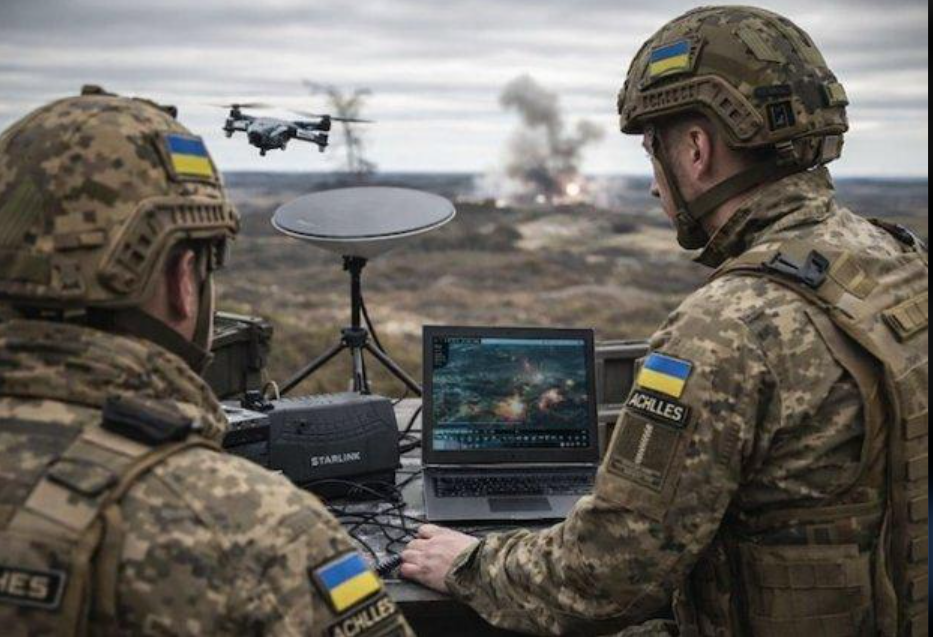
Is Elon Musk shutting down Ukraine’s defenses? Zelensky says new SpaceX restrictions are hindering efforts to shoot down Russian drones
Ukraine is once again facing restrictions on Starshield, the US satellite system developed by Elon Musk’s SpaceX. According to President Volodymyr Zelensky, technical restrictions prevent Ukrainian interceptor drones from reaching the speeds needed to destroy Russian attack drones. SpaceX denies changing how the system operates. Kyiv is demanding explanations from Washington.
NEWSruDaily | Ukraine • Technology • November 13, 2026
Ukraine’s air defenses face an unexpected problem
Ukrainian President Volodymyr Zelensky said Ukraine’s military is once again detecting speed restrictions affecting the Starshield satellite system — the military version of Starlink.
According to the president, the problem affects the entire front line and Ukraine’s temporarily occupied territories.
The restrictions take effect when equipment travels at about 161 kilometers per hour, or 100 miles per hour.
For ordinary satellite internet service, this might seem like a minor technical detail. But for military drones designed to intercept fast-moving aerial targets, that speed threshold becomes a critical limitation.
Zelensky says the restrictions prevent Ukrainian forces from effectively intercepting some Russian drones, including new jet-powered versions of Shahed-type drones.
He said some Russian strikes have already hit their targets because interceptor drones could not operate at the required speeds.
What is Starshield, and why does Ukraine depend on it?
Starshield is a specialized SpaceX satellite system developed for government and military customers.
Unlike standard Starlink, which provides internet access to civilian users, Starshield is designed for defense and national security missions.
Ukraine’s military uses satellite communications to control drones, gather intelligence and coordinate operations.
In modern warfare, reliable communications can be decisive.
If a drone loses its connection above a certain speed, it may be unable to complete its combat mission.
This is especially important for Ukraine, where interceptor drones have become one of the tools used to defend cities against Russian air attacks.
SpaceX denies imposing new restrictions
SpaceX rejected reports that it had changed how Starshield operates.
In a statement to Axios, the company said no changes had been made.
That puts Ukrainian officials’ statements in direct conflict with SpaceX’s position.
Ukraine maintains that the restrictions are systematic, rather than isolated technical glitches.
Still, it has not been publicly established who is responsible for the alleged restrictions or on what grounds they might have been imposed.
One important detail: Ukraine uses the military Starshield system under agreements with the US government.
The issue therefore involves not only Elon Musk’s private company but also US government agencies.
This is not the first time the problem has surfaced
Similar restrictions were reported in October.
At the time, Ukrainian authorities said the satellite system was subject to speed restrictions that hampered drone operations.
Kyiv later reported that the equipment was working again.
But Zelensky says the restrictions returned in November.
Ukrainian military specialists say the problem is particularly serious for high-speed drones used against Russian aerial targets.
According to The Kyiv Independent, Ukrainian commanders confirmed the speed restrictions to reporters.
Why is this happening now?
The latest reports of Starshield problems emerged amid talks between the United States, Ukraine and Russia on a possible end to the war.
Zelensky pointed to the timing and expressed concern about potential political implications.
The Ukrainian president also said restrictions affecting temporarily occupied territories raise questions about how the US views the status of those areas.
However, no evidence has been publicly presented that the restrictions were deliberately imposed to pressure Ukraine during negotiations.
The reasons behind the situation remain under investigation.
Washington demands answers
The situation has also prompted a response in the United States.
The Congressional Ukraine Caucus, a bipartisan group of US lawmakers, expressed concern about reports of problems with Starshield.
The lawmakers demanded explanations from Donald Trump’s administration and SpaceX.
European representatives also said any restrictions that hinder Ukraine’s ability to defend itself against Russian strikes are a serious cause for concern.
Kyiv is continuing talks with the US in an effort to restore the system’s full functionality.
Can a private company influence the outcome of a war?
The Starshield situation raises a question that extends far beyond Ukraine.
Modern militaries are increasingly dependent on commercial technologies: satellite communications, artificial intelligence, cloud computing and software.
The companies developing these systems are becoming important players in national security infrastructure.
But what happens when a military operation depends on technology controlled by a private corporation or a foreign government?
Can a single company effectively determine how well an entire country can defend its airspace?
The Starshield case shows how closely technology, business and geopolitics have become intertwined.
At the same time, there is currently no basis for asserting that Elon Musk personally ordered restrictions on Ukraine’s air defense system.
What happens next?
Ukraine is awaiting explanations from US authorities and SpaceX.
Zelensky insists the restrictions must be lifted because they directly affect the military’s ability to intercept Russian drones.
SpaceX continues to deny imposing new restrictions.
The central question today is not just who controls Starshield. It is how safe it is for a country to build a critical defense system around technologies whose operation it cannot independently guarantee.
For Ukraine, the answer is not a theoretical matter but a vital one.
NEWSruDaily — Independent News Without Borders.
Sources: Reuters, Axios, The Kyiv Independent, the official website of the president of Ukraine. November 12–13, 2026.