
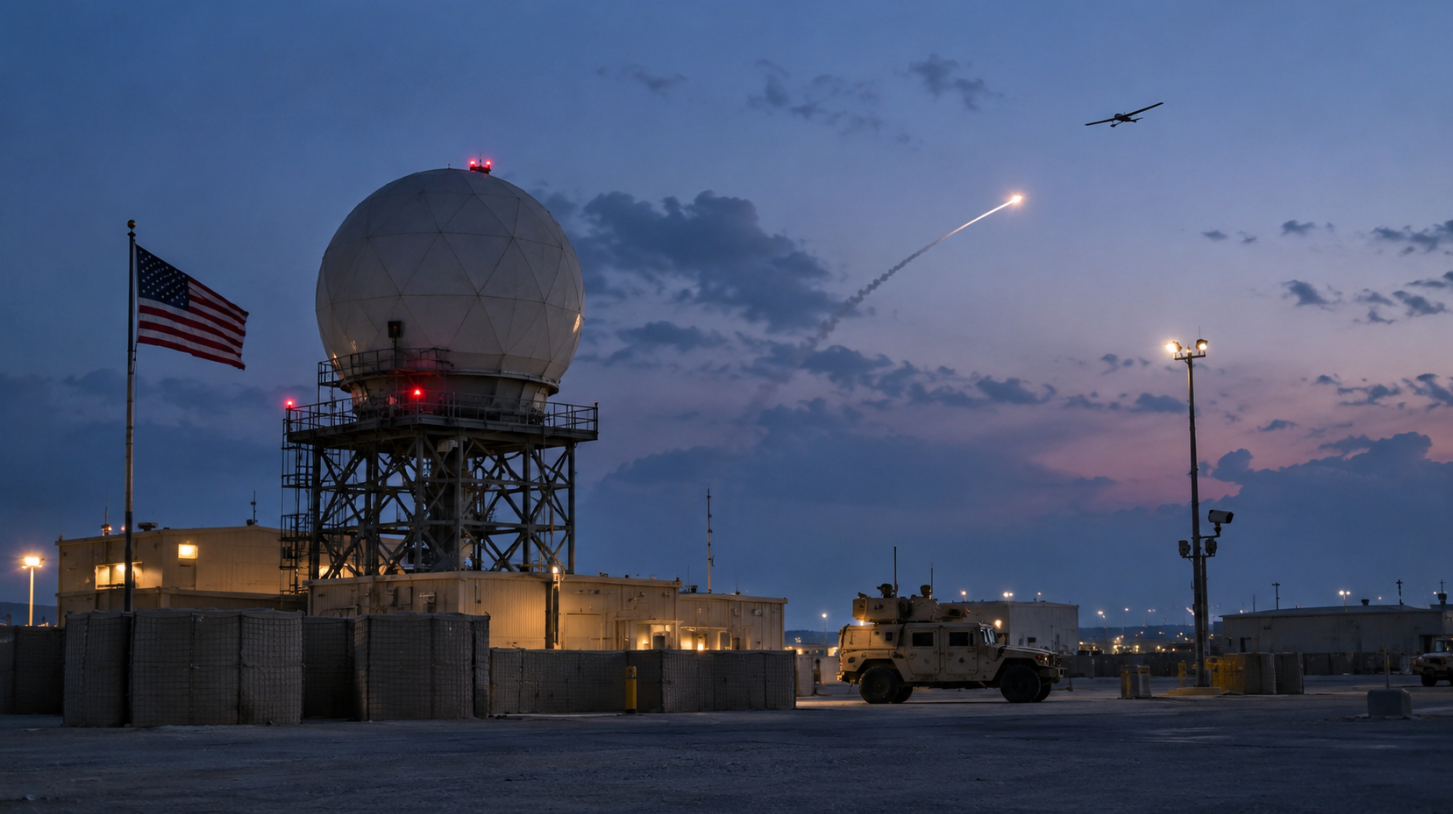
Iranian drones reportedly targeted an American military facility in Bahrain, raising fears of another dangerous escalation in the Middle East. With U.S. forces on alert and global energy markets watching closely, could the next confrontation trigger a wider conflict?
What Happened?
On November 17, Iran's Islamic Revolutionary Guard Corps (IRGC) claimed responsibility for launching drones toward an American radar installation at Sheikh Isa Air Base in Bahrain.
Iranian officials described the operation as retaliation for alleged violations of Iranian airspace by American surveillance drones.
However, U.S. Central Command (CENTCOM) disputed claims that the attack had successfully damaged American equipment.
According to U.S. officials, the incoming drones were intercepted, with no reported American casualties or damage to military infrastructure.
Why Bahrain Matters
Bahrain may be a small country, but its strategic importance is enormous.
The island nation hosts the U.S. Navy's Fifth Fleet, which oversees critical maritime operations throughout the Persian Gulf, Red Sea, and surrounding waterways.
Any attack on American military facilities in Bahrain risks drawing Washington deeper into regional hostilities.
The incident also highlights the increasingly dangerous confrontation between Iran and the United States.
Could Americans Feel the Economic Impact?
The biggest concern extends far beyond military installations.
The Strait of Hormuz, located near Iran, is one of the world's most important shipping routes for oil and liquefied natural gas.
A serious disruption could send energy prices higher, increase shipping costs, and contribute to inflation worldwide.
For American consumers, escalating tensions could eventually mean higher gasoline prices and more expensive goods.
Diplomacy or Military Response?
Despite mounting tensions, diplomatic efforts remain essential.
Regional mediators, including Oman and Qatar, have historically played important roles in facilitating communication between Washington and Tehran.
But each additional military confrontation increases the possibility of miscalculation.
Even an intercepted drone can become the beginning of a much larger crisis if either side decides to retaliate.
What Happens Next?
The central question is whether Washington and Tehran can prevent further escalation.
The drones may have been intercepted, but the political consequences could prove much harder to contain.
Should the United States respond with military force, or is diplomacy the only realistic way to prevent a wider war?
Share your opinion in the comments.
NEWSruDaily — Independent News Without Borders