
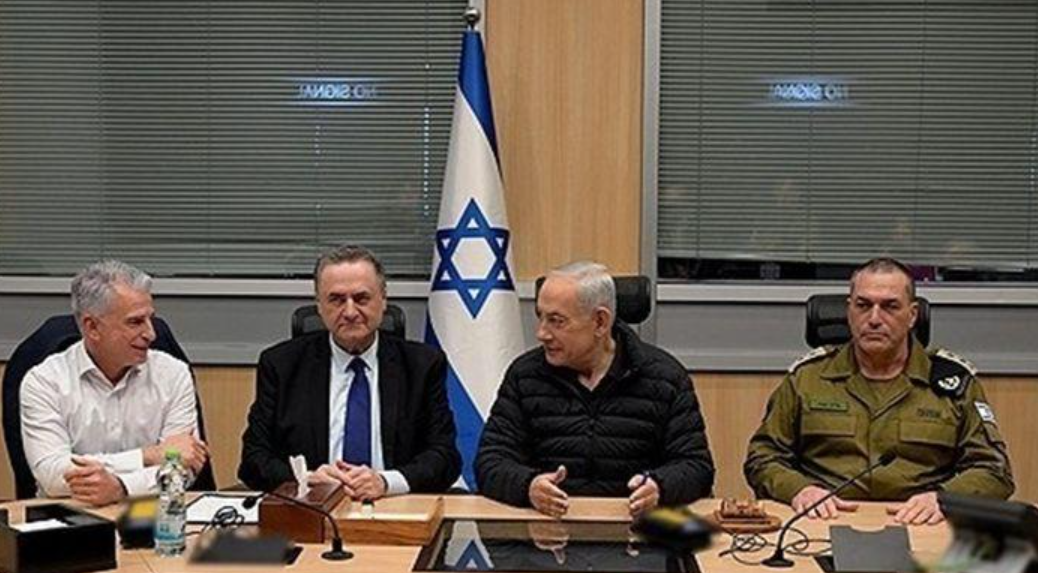
Is Israel pushing the United States toward another military confrontation with Iran? Mossad Director Roman Gofman traveled to Washington on Friday for high-level discussions with American officials as Israeli Prime Minister Benjamin Netanyahu reportedly intensified pressure on President Donald Trump to resume military strikes against Tehran. But Trump appears to have a different strategy.
NEWSruDaily | Israel • Middle East | November 13, 2026
Israel's Spy Chief Arrives in Washington
The head of Israel's Mossad intelligence agency, Roman Gofman, traveled to Washington on Friday, November 13, for talks with senior officials in the Trump administration about Iran.
According to Axios, which cited three sources familiar with the visit, Gofman was meeting with CIA Director John Ratcliffe and was expected to travel to Miami for discussions with White House Middle East envoy Steve Witkoff.
The Mossad, CIA and White House declined to comment on the reported meetings.
The visit comes at a particularly sensitive moment in U.S.-Israeli relations, with Netanyahu reportedly urging Washington to renew military operations against Iran while Trump has resisted calls for another round of strikes.
Netanyahu Wants Military Action. Trump Prefers Pressure.
The disagreement reflects two different approaches to dealing with Tehran.
Netanyahu has reportedly argued that renewed military action is necessary to prevent Iran from rebuilding its military capabilities and strengthening its position in the region.
Trump, however, has so far rejected requests to resume large-scale combat operations.
Instead, Washington has maintained a naval blockade and economic pressure against Iran while exploring the possibility of a negotiated agreement.
According to Axios, Trump and Netanyahu discussed the Iran conflict during a November 5 telephone conversation.
The U.S. president's position also reflects the concerns of several Gulf allies, including Saudi Arabia, Qatar and the United Arab Emirates, which have favored giving economic and diplomatic pressure more time.
For these countries, renewed fighting could threaten regional security, energy infrastructure and international shipping.
Could the United States Return to War?
Although Trump has resisted immediate military escalation, he has not ruled out further strikes.
In comments on Thursday, November 12, the president said he would be prepared to use force if circumstances changed or American interests and allies were threatened.
That leaves Washington pursuing a delicate strategy: maintaining military pressure while attempting to avoid another major confrontation.
The stakes extend well beyond Israel and Iran.
The conflict has affected security across the Persian Gulf, including the Strait of Hormuz, one of the world's most strategically important shipping routes.
Any renewed escalation could have consequences for international energy markets, commercial shipping and American military personnel stationed in the region.
Netanyahu Faces a Political Crisis at Home
The diplomatic confrontation comes as Netanyahu faces uncertainty over his political future.
Following Israel's October 27 parliamentary election, his political bloc lost its majority in the Knesset.
President Isaac Herzog has tasked opposition leader Gadi Eisenkot with attempting to form a new government.
If Eisenkot succeeds in assembling a governing coalition, Netanyahu could be forced from office.
Against that backdrop, some Israeli opposition figures have expressed concern that a renewed confrontation with Iran could disrupt the transition of power.
Those concerns remain political allegations. There is no publicly established evidence that Netanyahu has decided to launch military action for the purpose of preventing a new government from taking office.
Even Israel's Security Leadership Is Divided
Israeli media have also reported disagreements within the country's security establishment about the urgency of another strike against Iran.
According to Channel 12, Israel Defense Forces Chief of Staff Lt. Gen. Eyal Zamir has opposed immediate military action, despite recognizing Iran as a serious security threat.
The reported disagreement centers on whether the current circumstances justify renewed fighting and whether escalation could undermine Israel's political stability.
These reports have not established that a new military operation has been approved.
The Bigger Question: Who Decides What Happens Next?
For decades, Israel and the United States have maintained a close strategic partnership, particularly on questions involving Iran's nuclear ambitions and regional influence.
But close allies do not always agree on when military force should be used.
Netanyahu appears to favor renewed pressure through military action.
Trump, for now, has preferred economic isolation, naval restrictions and the possibility of diplomacy.
The question is no longer simply whether Israel considers Iran a threat. It is whether Netanyahu can persuade Trump that another war is worth the risks.
For Washington, the calculation involves American troops, regional allies, oil markets and the possibility of a broader conflict.
For Israel, it involves national security at a moment of domestic political uncertainty.
And for Iran, the outcome could determine whether the current confrontation moves toward negotiations or another dangerous escalation.
One thing remains clear: the reported visit by Israel's intelligence chief does not mean that Trump has agreed to resume military strikes.
But it demonstrates how consequential the decisions being discussed in Washington have become.
NEWSruDaily — Independent News Without Borders.
Reporting based on Axios, The Jerusalem Post, The Times of Israel and Ynet, November 13, 2026.