
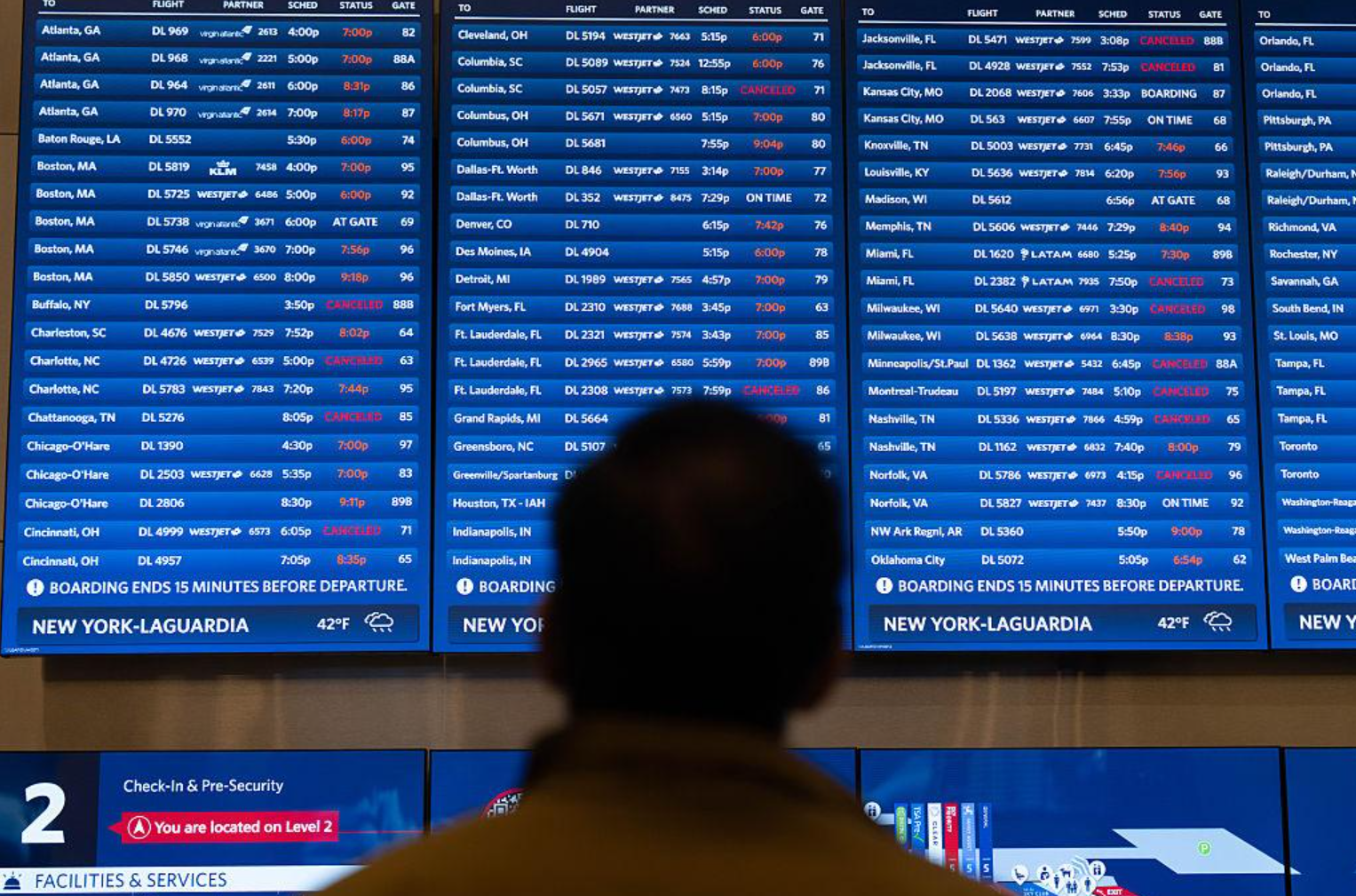
Thousands of canceled flights, passengers stranded at airports, and serious questions about the safety of US aviation infrastructure. A major technical outage exposed just how vulnerable a system that millions of people rely on every day can be.
On Friday, November 13, the Federal Aviation Administration (FAA) ordered a temporary halt to aircraft departures nationwide. The cause was instability in the communications and data transmission system used by air traffic controllers.
The restrictions lasted more than four hours, marking one of the most serious disruptions to US aviation in decades.
What exactly happened?
According to the FAA, the technical problem began around 3:30 p.m. Eastern time. The system started receiving an unusually large volume of data—about 1,000 connection attempts every four to five seconds.
This disrupted the network that supports air traffic control centers. The instability affected 17 of the country's 22 regional air traffic control centers.
As a safety precaution, the FAA halted new departures nationwide. Meanwhile, about 3,500 aircraft already in the air were able to land safely.
The agency emphasized that communications with aircraft were not completely cut off: Some radio frequencies and radar channels continued to operate.
Who is responsible?
The preliminary investigation is focused on two facilities—a radar station in Amarillo, Texas, and a radio communications facility in El Dorado, Arkansas.
At the latter site, contractor L3Harris had been carrying out work that included installing a new network router.
Investigators are examining how equipment changes could have overloaded the aging communications system.
The FAA said it has so far found no evidence of a cyberattack or deliberate malicious activity.
The exact cause of the outage is still being determined.
How many flights were affected?
The impact was widespread.
Airlines canceled thousands of flights on Friday. On Saturday, more than 6,400 flights were canceled and over 8,000 were delayed, according to FlightAware.
By Saturday evening, hundreds of flights scheduled for Sunday had already been reported canceled.
Many passengers faced missed connections, the need to rebook tickets, and additional hotel expenses.
FAA Administrator Bryan Bedford said he expected normal flight schedules to resume by the end of Sunday, November 15.
Why is Washington seeking billions more?
The outage renewed scrutiny of the state of the US air traffic control system.
Transportation Secretary Sean Duffy urged Congress to provide additional funding to modernize it. According to Reuters, the funding request totals $50 billion.
Some critical infrastructure still relies on outdated technology. The administration says replacing it is necessary to prevent similar emergencies.
But the central question is not just how much money is allocated, but how effectively it will be spent.
Is flying dangerous now?
The FAA says flying remains safe. The agency emphasized that the decision to halt departures was a preventive measure.
All aircraft in the air when the restrictions took effect landed safely.
Still, the incident exposed a serious problem: A technical failure in communications infrastructure can bring air travel across an entire country to a near standstill.
What happens next?
The FAA and contractor L3Harris are continuing their investigation. As a precaution, the agency disabled a specific feature on approximately 60 similar routers.
Airlines are gradually restoring their schedules, but passengers are advised to check their flight status just before heading to the airport.
The key question now is not just why America halted flights for several hours, but whether a similar outage could happen again.