
Ukraine attacks Russia with nearly 1,200 drones: Major oil refinery burns as Russia launches retaliatory strikes on Ukrainian cities
The night of November 12–13 saw one of the largest drone attacks of Russia’s war against Ukraine. Moscow said it intercepted 1,198 Ukrainian drones. A major oil refinery caught fire in Volgograd, and deaths were reported. At the same time, Russian forces attacked Ukrainian cities and energy infrastructure, injuring dozens of people and leaving residents across 12 regions facing power outages.
NEWSruDaily | Ukraine • War | November 13, 2026
Nearly 1,200 drones in a single night
According to Russia’s Defense Ministry, Russian air defense systems intercepted 1,198 Ukrainian long-range drones overnight on November 12–13.
If those figures are confirmed, the attack would rank among the largest since Russia launched its full-scale invasion of Ukraine in February 2022.
The strikes hit several Russian regions, including the Volgograd and Rostov regions.
Russian regional authorities reported seven deaths and 17 injuries from attacks in three regions. A 12-year-old child was among those killed.
The number of drones Russia’s Defense Ministry said it shot down cannot yet be independently verified.
Oil refinery attacked in Volgograd
A major Lukoil oil refinery in Volgograd was one of the main targets of the Ukrainian attack.
The General Staff of Ukraine’s Armed Forces confirmed a strike on the Lukoil-Volgogradneftepererabotka refinery.
A fire broke out in the industrial area after the attack.
Volgograd regional Governor Andrey Bocharov said four workers were killed and two other people were injured.
According to Ukrainian officials, several oil processing units and petroleum storage tanks were damaged. No independent assessment of the damage is available yet.
The Volgograd refinery can process about 15 million metric tons of oil annually and is one of Russia’s largest refineries.
Ukraine’s military command says strikes on oil refining infrastructure are intended to reduce fuel supplies to Russian forces and cut the revenue used to finance the war.
Russia attacks Ukraine: Residential buildings destroyed
Russian forces launched 117 drones at Ukraine that same night, Ukrainian authorities said.
Residential neighborhoods and energy infrastructure came under attack.
Zaporizhzhia was particularly hard hit.
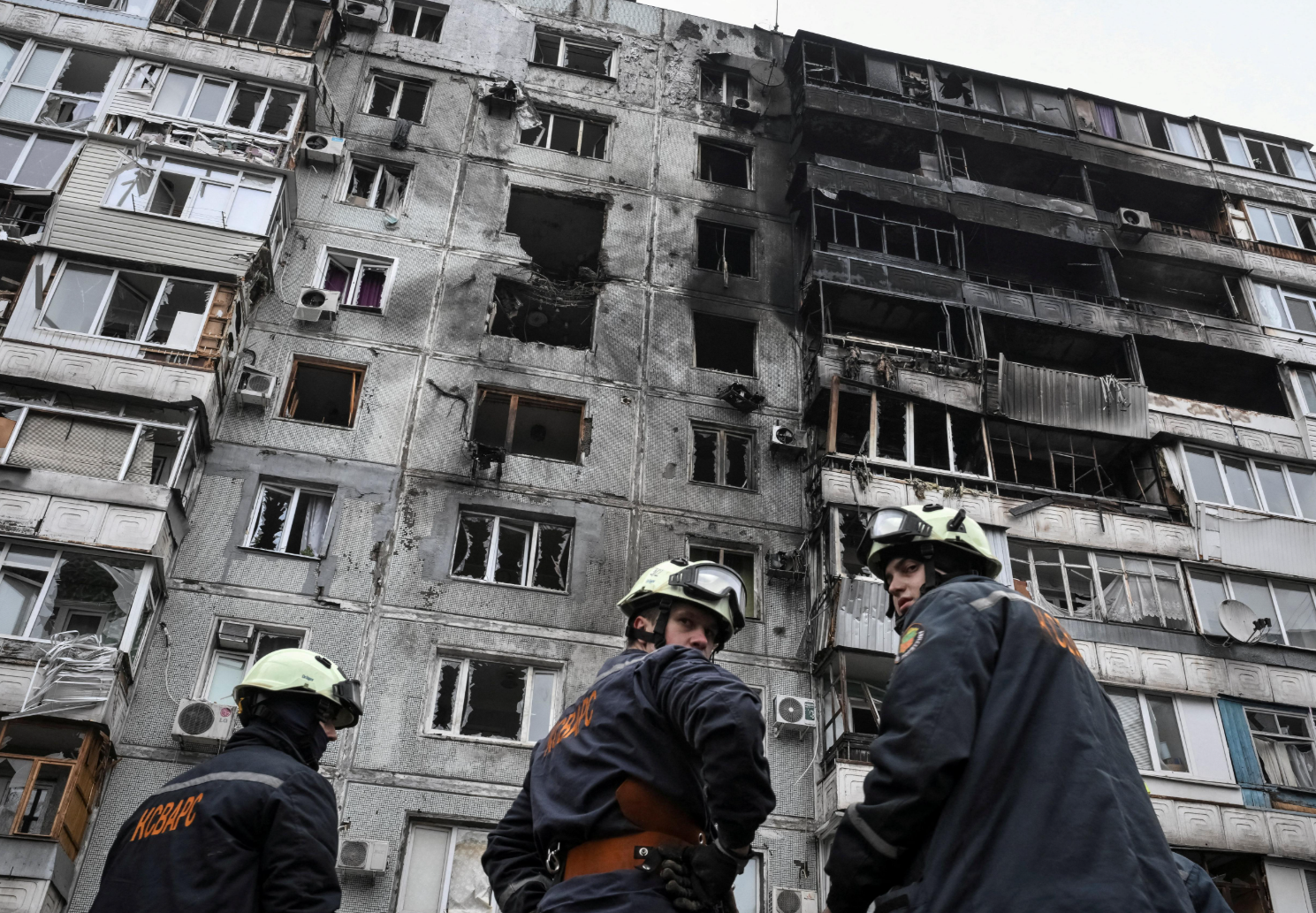
A Russian strike damaged two five-story apartment buildings.
According to updated figures from local authorities, 30 people were injured, including six children.
Ukrainian emergency services also reported deaths from Russian attacks, including that of a 17-year-old.
Rescue workers cleared rubble and helped residents leave damaged buildings.
Residents across 12 regions left without power
Russian strikes once again hit Ukraine’s energy system.
Ukraine’s first deputy energy minister, Artem Nekrasov, reported power disruptions in 12 regions of the country.
The extent of the outages varied: Some areas lost power temporarily, while others required additional repairs by utility crews.
As cold weather sets in, the condition of the power grid is becoming especially important for millions of Ukrainians.
Russia has repeatedly attacked Ukrainian power plants and distribution networks since the start of the full-scale invasion.
Damage to energy infrastructure threatens not only industry but also heating, water supplies, hospitals and other essential services.
Drone warfare reaches a new level
The scale of the attack shows how dramatically the nature of the war has changed.
While artillery, tanks and missiles drew most of the attention in the early months of the full-scale invasion, drones have now become one of the key tools for both militaries.
Ukraine uses long-range drones to strike targets inside Russia, including oil refineries, warehouses and military infrastructure.
Russia, meanwhile, continues to use attack drones against Ukrainian cities and energy facilities.
Advances in drone technology make increasingly large-scale operations possible, but also increase the risks to civilians.
Attacks come amid peace talks
The latest wave of strikes coincided with intensified diplomatic efforts to end the war.
Representatives from the United States, Russia and Ukraine continue to discuss possible terms for a settlement.
US mediators Steve Witkoff and Jared Kushner also announced plans to broaden the talks to include European representatives.
However, major disagreements remain between the parties over territory, security guarantees and the future of Europe’s defense framework.
European leaders fear the talks could affect not only Ukraine’s future but also the security principles established after the Cold War.
As diplomats discuss peace, the war grows in scale
The overnight events of November 13 highlight the disconnect between diplomatic statements and developments on the battlefield.
On one hand, the United States is trying to secure a breakthrough in negotiations.
On the other, Russia and Ukraine continue to launch increasingly intense strikes.
Nearly 1,200 drones in a single night is more than a military statistic. It is a measure of how far the war has spread beyond the front lines.
For Russia, the consequences include damage to industrial facilities and loss of life.
For Ukraine, they include destroyed apartment buildings, injured civilians and more power outages.
The central question now is whether diplomatic efforts can halt the escalation before the next wave of attacks grows even larger.
NEWSruDaily — Independent News Without Borders.
Sources: Associated Press, The Moscow Times, The Kyiv Independent, statements from the General Staff of Ukraine’s Armed Forces and regional authorities in Russia and Ukraine. Information as of November 13, 2026.