
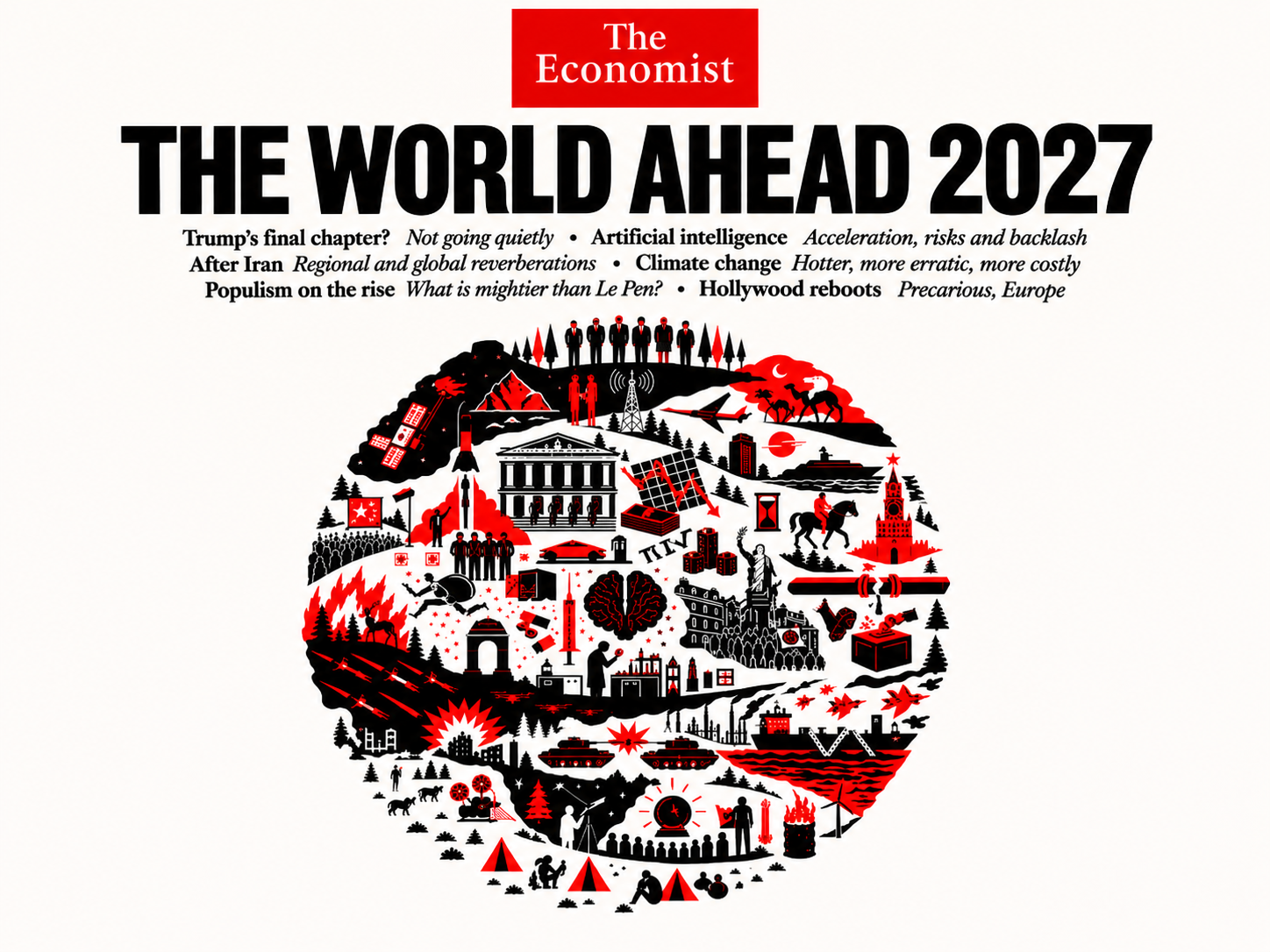
A global financial crisis, escalating wars, artificial intelligence running out of control, and a dramatic transformation of society. The Economist's annual The World Ahead 2027 forecast paints a picture of a world facing extraordinary uncertainty. But is 2027 really going to be as frightening as its cover suggests?
A Financial Crisis Waiting to Happen?
One of the biggest concerns heading into 2027 is the fragile state of the global economy.
Government debt continues to rise, financial markets remain vulnerable to political instability, and investors are increasingly questioning whether major economies can sustain their spending.
A sudden loss of confidence could trigger market turbulence. However, financial vulnerability does not necessarily mean another global crash is inevitable.
Artificial Intelligence: Revolution or Threat?
AI is rapidly transforming industries, replacing certain tasks, and attracting enormous investment.
But the technological revolution comes with serious questions.
Could AI investment create another financial bubble? How many jobs will disappear? And what happens when increasingly powerful technology becomes difficult to regulate?
The real concern is not necessarily a science-fiction-style robot uprising, but whether governments, businesses, and workers can adapt quickly enough.
Wars and a Changing World Order
Geopolitical tensions remain among the most serious risks facing the world.
The war in Ukraine, instability in the Middle East, and growing tensions surrounding Taiwan continue to threaten international security.
Meanwhile, competition between the United States and China is reshaping global trade, technology, and military alliances.
A wider conflict is possible, but it is far from inevitable.
The Obesity Revolution
Surprisingly, obesity is another major topic in discussions about the future.
The rapid development of weight-loss medications could transform healthcare, pharmaceutical markets, and even consumer behavior.
Unlike wars or economic instability, this development could represent a significant medical breakthrough, although affordability and long-term health outcomes remain important questions.
Is 2027 Really Going to Be a Disaster?
The Economist's annual forecasts are not predictions of unavoidable catastrophe. They examine emerging trends, potential risks, and opportunities that could shape the coming year.
And while the challenges are substantial, advances in medicine, renewable energy, and technology also offer reasons for optimism.
The biggest question isn't whether 2027 will bring change. It's whether the world is prepared for how quickly that change could happen.
What worries you most about 2027: financial instability, artificial intelligence, or the possibility of another major war?
NEWSruDaily | Independent News Without Borders