
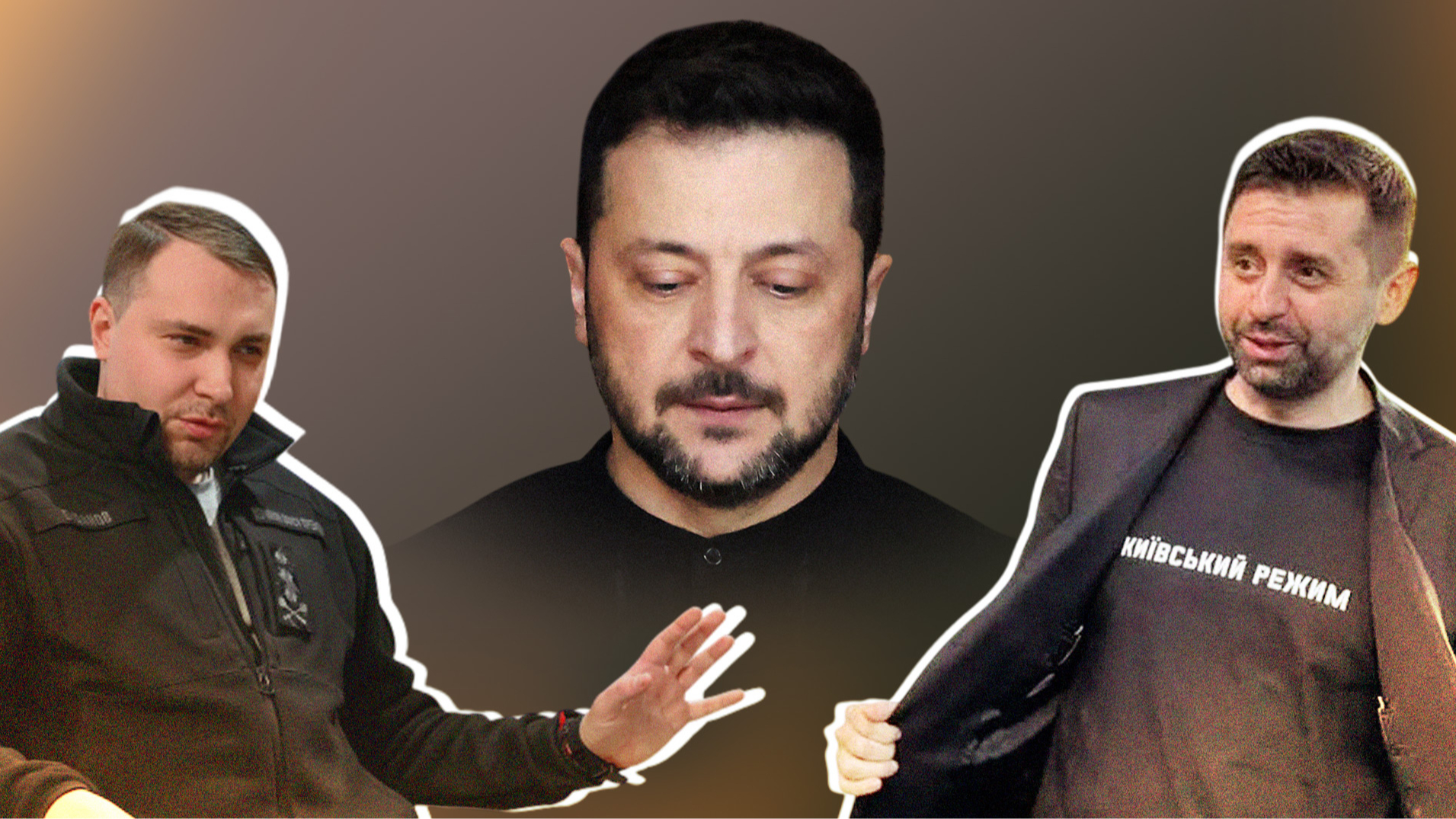
It is hard to imagine two political figures as different as Kyrylo Budanov and Davyd Arakhamia.
They differ in temperament, demeanor and working style. Most importantly, though, the sources of their political clout and the ways they influence President Volodymyr Zelensky are fundamentally different.
That makes it all the more interesting to watch how they have gradually become the two most important decision-makers after the president in the current power structure.
To understand how this happened, we need to return to the start of 2026, a period marked by a sweeping redistribution of Andriy Yermak’s “dynastic inheritance.”
After Mykhailo Fedorov’s high-profile departure, two people remained the main beneficiaries of that process: Budanov, who replaced Yermak as head of the President’s Office, and Arakhamia, who finally earned the cardinal’s skullcap as the chief power broker behind the scenes.
The head of the President’s Office and the leader of the Servant of the People parliamentary faction now form the core of Ukraine’s team at peace talks with Russia and the United States, while also jointly handling a wide range of domestic political affairs.
Predictably, such close cooperation at the highest political level is gradually breeding competition for influence over decision-making. That is happening even in areas where the division of responsibilities would seem to have been settled long ago. One example is relations with the Verkhovna Rada, Ukraine’s parliament, which for years was Arakhamia’s political fiefdom but is increasingly drawing Budanov’s interest.
Ukrainska Pravda examined how cooperation between these two centers of influence around Zelensky is gradually turning into competition, what underpins each man’s political strength, and whether Arakhamia and Budanov can maintain a balance between shared national priorities and their own political interests.
Two at the Negotiating Table
The current iteration of the peace process, which began in early 2026, coincided with a change in the de facto leaders of the Ukrainian negotiating team. Instead of Yermak and the team of officials and diplomats assembled around him, Arakhamia and Budanov took the leading roles in the talks.
The logic behind the decision was simple: Both had their own parallel channels of communication with senior officials in US President Donald Trump’s administration. At the same time, each maintained a separate channel to the Russians.
So when Zelensky looked for someone to replace Yermak in the negotiations, he did not choose between Budanov and Arakhamia. He brought in both. The two had also grown very close during their joint stand against Yermak.
But friendship and teamwork did not erase their independence. Before long, each had reserved the right to go solo from time to time.
Arakhamia, for instance, can work with Rustem Umerov to use their own contacts to accomplish specific tactical goals. One example would be bringing the Europeans into the talks through a kind of “guerrilla operation,” without the Russians or Americans knowing.
Budanov, for his part, also sometimes pursues his own agenda, occasionally without consulting other delegation members beforehand, simply informing them of the results of conversations that have already taken place.
Their different approaches are apparent in the discussion of the Donbas, for example. According to Ukrainska Pravda’s sources on Zelensky’s negotiating team, Budanov is trying to explain to the Americans, and through them to the Russians, where a demarcation line might be drawn that would theoretically be acceptable to Ukraine’s military and public. Arakhamia, by contrast, proposes that the parties “forget” about the Donbas altogether until questions about guarantees for peace in Europe are resolved.
Both positions are conveyed to Trump’s envoys through parallel channels, each in the hope that its approach will work. Budanov and Arakhamia thus cooperate while simultaneously pursuing their own strategies.
“Fortunately, everyone has the same overarching directives from the Boss [President Zelensky — Ukrainska Pravda]. Within those parameters, each tries to pursue something of his own and achieve some result. And if someone succeeds, they’ll only be thanked for it,” explains a Ukrainska Pravda source involved in the negotiations.
Two in Power
From the moment Budanov and Arakhamia returned to the negotiating process in early 2026, they differed in their assessments of its prospects.
At the time, Ukrainska Pravda’s sources close to Budanov insisted that he had agreed to head the President’s Office specifically to join the negotiating team and secure a quick result — within months, not years.
Arakhamia, who had been involved in negotiations with the Russians since the first days of the full-scale invasion, was considerably more skeptical about the prospects for a quick peace. Nevertheless, both got to work.
When it became clear that no quick result was coming, Budanov found himself something of a hostage to the bureaucracy. Formally, he held one of the country’s most important positions, but during his first months he focused primarily on the negotiations and did not engage much with the government or parliament.
As the talks quieted down, the new head of the President’s Office saw his position as an excellent opportunity to test his own approaches to governing. But his first attempts to get involved in domestic politics ran into a turf-conscious reaction from Zelensky.
According to a Ukrainska Pravda source in the Servant of the People leadership, the president would sometimes cancel Budanov’s meetings with parliamentary factions or insist on personally opening meetings with regional leaders. Zelensky would occasionally deliver a few introductory remarks and leave, with Budanov then chairing the rest of the meeting. Within the system, this was seen as a demonstration of who was in charge.
That was when Arakhamia came to Budanov’s aid. According to sources in the Servant of the People faction, the leader of the president’s parliamentary party explained to the head of the President’s Office how sensitive Zelensky was to public displays of independence by subordinates.
“First you have to earn the Boss’s trust, not in military affairs but in politics, and prove that you can manage complex issues effectively and respect the chain of command. Only then can you expect greater autonomy,” one influential Servant of the People lawmaker says, recounting Arakhamia’s advice to Budanov.
At the same time, Zelensky’s wariness may have gone beyond questions of hierarchy.
Budanov made no secret in political circles that he recognized the extent of his public support and its potential to translate into support for a presidential bid, or at least a faction in a future parliament. Those remarks quickly reached Zelensky in numerous retellings and written accounts.
In every other similar case, from Valerii Zaluzhnyi or Oleksandr Kubrakov to Mykhailo Fedorov, potential political rivals came under pressure from the president, began pushing back and were ultimately ousted from the team.
Budanov, however, appears to have listened to his friends in parliament. Starting in the summer, his cooperation with the president became a model of constructive engagement. One public example was work on the proposed Pantheon of Ukrainian heroes and the reburial of historical figures, including Andriy Melnyk. Budanov handled the entire organizational process, but the president was almost its sole public face, despite having previously been highly skeptical of the initiative.
Budanov also became more adept at navigating internal power politics. At first, lawmakers had mixed impressions of the new presidential office chief’s meetings on parliamentary affairs.
“Kyrylo’s first meetings seemed a little cringeworthy to us. He is a military man, after all, and we had to explain a lot of our internal workings from scratch: why some lawmakers vote and others don’t, what interests a particular group has, who stands behind a certain faction, and so on. To us, this was basic stuff, but he had no idea,” recalls one Ukrainska Pravda source in the president’s faction who attended the lawmakers’ first meetings with Budanov.
Within a few months, however, those meetings became noticeably more effective. Lawmakers now had a practical reason to ask Budanov to convene one: They could do more than discuss a problem — they could actually find a solution.
It was after Budanov gained ground in domestic politics that a new balance of power began to emerge in his relationship with Arakhamia. Until then, only Davyd had known the secret handshakes and passwords to all of parliament’s “hidden rooms.” Now the man he had regarded as a guest suddenly had a pass of his own.
Two in Parliament
Even during his time at the Defense Intelligence Directorate, known as HUR, Budanov established a reputation as someone who could maintain contact with virtually anyone. His circle of contacts included businesspeople, representatives of oligarchic groups, politicians from various camps with varying degrees of notoriety, and both major and minor figures in the criminal underworld.
For an intelligence chief, such a broad network was explained as a professional necessity.
But after Budanov moved to the President’s Office, those same connections began to play an entirely different role. In Zelensky’s political system, responsibility for communicating with different political groups had been divided among different officials. With some opponents, such as Petro Poroshenko, the president’s team had spent years communicating mainly through pressure.
Before Budanov arrived at the presidential offices on Bankova Street, the only person with a reputation as an all-purpose negotiator was Davyd Arakhamia. His indispensability in parliament rested neither on legal expertise nor on an unmatched ability to draft legislation. His main superpower was the ability to strike a deal with almost any group and round up votes even for a difficult bill.
For years, that ability guaranteed Arakhamia a special place in the power structure. Since parliament appoints and dismisses dozens of officials, its “director” can all but guarantee some of them a job for life.
Ukrainska Pravda’s sources cite former Prosecutor General Ruslan Kravchenko as an example: Before he fled the country in disgrace, Arakhamia’s political backing and support through informal understandings helped him keep his job despite having numerous enemies in the President’s Office and other institutions.
Arakhamia usually managed to round up votes largely on his own. When Andriy Yermak tried his hand at it, the results were often counterproductive.
That was why Budanov was initially brought into this work with little expectation that he could be genuinely useful to Servant of the People. But he was.
Gradually, another negotiator who “knows everyone” appeared on territory where Arakhamia had previously held a monopoly on communication with opposition lawmakers and groups considered politically toxic for the administration. Just as he had in the peace process, Budanov began conducting his own parallel outreach in parliament.
“When you’re rounding up votes, you need someone who is always there, who can meet and negotiate with the right people. And once a deal is reached, he needs to be able to pick up the phone, call the right official and sort things out. Bringing Budanov in was a gift to the faction. Everyone likes Davyd, everyone works with him, but he has so much on his plate that sometimes he’s available for half an hour a day in the car on his way home or between flights. And you need things done now,” explains a Ukrainska Pravda source in parliament.
Previously, Arakhamia was the primary heavyweight who could sort out any issue for lawmakers, call the president, speak to the prime minister and so on. Now Servant of the People lawmakers have at least two. Ironically, this happened with the blessing of the faction leader himself.
“When Motovylovets [the faction’s deputy leader — Ukrainska Pravda], committee chairs or other lawmakers suggested bringing in Budanov to resolve a problem, Davyd usually agreed: ‘Call Kyrylo, the office can handle that too.’ So now Budanov is handling many times more issues,” says a Ukrainska Pravda source in Servant of the People.
Outwardly, Arakhamia and Budanov’s relationship remains perfectly functional and even friendly. They continue traveling to negotiations together, meeting and talking about both work and personal matters. But the Servant of the People leadership is already noticing the first signs of competition.
According to one Ukrainska Pravda source in the leadership of the president’s faction, Budanov’s emergence as a player in parliament coincided with Arakhamia becoming noticeably more active in parliamentary work itself: engaging more often in negotiations with groups of lawmakers, the opposition and individual influential players.
“Davyd is more interested in working on things like the negotiations, the Aleshki brothers and so on. But now a new player has appeared on his turf. You can’t leave that unattended. So we’re seeing more of Davyd these days. He’s arranging things for Opposition Platform — For Life; Poroshenko was going around whining that Hetmantsev was mistreating him, and Davyd is saving his Roshen company from Danylo, who’s on our own team,” one senior Servant of the People figure says with a wry smile.
Still, lawmakers see risks as well as benefits in Budanov’s increasingly active involvement in parliamentary affairs.
“Kyrylo’s only problem is that he has quite a risk-taking personality. When you’re an intelligence officer, that’s normal, even useful. But when you’re negotiating with the dragons we have in parliament, it isn’t always a good thing.
We’ve already had situations where representatives of opposition factions struck deals with Budanov on things that weren’t realistic. He promised them something, and then they voted for European integration bills. Then they come to us and say: Come on, deliver what you promised. And we don’t even know what they were promised or by whom. You can’t operate that way in parliament,” says a member of the Servant of the People leadership.
***
Over nearly 11 months on Bankova Street, Kyrylo Budanov has gradually been transforming from a strictly military leader into a military and political figure. While retaining ties and a degree of influence within HUR, he is also building his own political capital — primarily through his work with parliament and a broad range of domestic political players.
If this trend continues, Davyd Arakhamia could face, if not a direct competitor, then at least a genuine alternative: someone capable of breaking his yearslong monopoly on negotiations with opposition groups, whose support is now needed to pass even the measures most essential to the country.
This also matters to the current power structure because of Arakhamia’s own vulnerability. Political circles are discussing possible criminal proceedings, particularly over under-the-table salary payments to lawmakers. Not long ago, activists from the Anti-Corruption Action Center even secured the opening of a separate criminal case against Arakhamia.
As long as Arakhamia remains the main person capable of assembling a parliamentary majority, his potential removal from the negotiating process and parliamentary work would cause a serious disruption to governance.
The emergence of another center of influence capable of taking on some of that work could therefore make the system more resilient.
The key is to ensure that this alternative center does not itself become embroiled in a criminal scandal and get swept away by another installment of “Forrest Gump” or “Carthage” from the National Anti-Corruption Bureau of Ukraine.
After all, there are not that many candidates for the role of the “unidentified individual in the leadership of the President’s Office” mentioned dozens of times in recordings of conversations involving former deputy presidential office head Iryna Mudra.
Roman Romaniuk, Ukrainska Pravda